


Gặp (Reunion) – a Digital Bridge Between Users and Ancestors
About Hương:
Ancestor worship in Vietnam originates from the ancient belief that each person possesses a soul within the body. When the body perishes, the soul remains and can still influence the world of the living. In the worship rituals meant to connect with these souls, the act of burning incense has become profoundly important. The rising smoke from incense is seen as opening a pathway to the spiritual realm, symbolizing the living’s reverence and sincerity toward the departed.
However, in modern times, as countless traditions constantly changing, the meaning of burning incense seems to be slowly slipping away. How, then, can we better understand and cherish this thousand-year-old custom? The answer lies in a uniquely designed product -an experience deeply infused with the essence of “Hương” (Incense) which, at its core, is born from sincerity before the ancestral altar. With Hương, each of us becomes both a keeper and a connector: simply light the incense, and the spiritual world unfolds – connecting us with our ancestors, the God of Wealth, the Kitchen Gods, and more. Every step of using Hương becomes a deeply personal journey, through which the worshipper absorbs the meaning of the ritual and strengthens their connection with the ancestral and divine realms.
Brand name: Brand name: The name “Huong” (Hương) is an alternative way to refer to “nhang” (incense), clearly reflecting the design focus of the brand – a product that can emit a fragrant smoke when burned. “Huong” evokes the scent that fills and envelops the space, resonating with the consumers’ memory of connections to ancestors and ancestral worship, rooted in ancient spiritual cultural beliefs.
Logo: Inspired by the very first letter in the product name “Hương,” the lowercase letter “h” is redesigned in a more stylized way. Delving into the logo design process for the product, the stylized stem of the letter “h” is built (base) on three core ideas. The first stroke represents the Yin–Yang in calligraphy, creating flowing, expansive, and soft curves. This also leads to the second idea: the Yin Yang symbol, with the philosophy of Yin Yang and the Five Elements deeply rooted in Vietnamese ancestral worship culture. The final stroke is based on the random, undirected movement of incense smoke, aiming to brand the product identity “Hương” from the very “smoke line” of the logo.
Palette: The color palette focus on two tones: Red and Green, across various shades. The product of “Hương” primarily uses red (Fire) to symbolize luck, vitality, life force, and prosperous power, combined with green (Wood) to symbolize trees, nature, vitality, and vigorous growth. This creates a design rich in Feng Shui symbolism within East Asian folklore, reflecting the concept of the Five Elements (metal, wood, water, fire, earth) that make the universe. In terms of tone, before pastel shades appeared, Eastern traditional art favored bold, strong hues, so the “Hương” product is designed to mirror that same color usage.
Pattern: Inspired by the philosophy of Yin-Yang – the circle of Yin and Yang from the Phùng Nguyên culture and the Đông Sơn culture of ancient Vietnam, with yin-yang motifs in the form of the letter S carved delicately on various ceramic wares. With soft curves and harmonious balance, these patterns are not only decorative but also tell a story of cosmic harmony through pairs of opposite concepts: day and night, male and female, birth and death, yin and yang harmonizing, or the Five Elements generating, overcoming, restraining, and transforming each other. Originating from the Vietnamese spiritual beliefs, they express a unique, elegant beauty, where the echoes of ancient folklore continue to resonate in modern design.
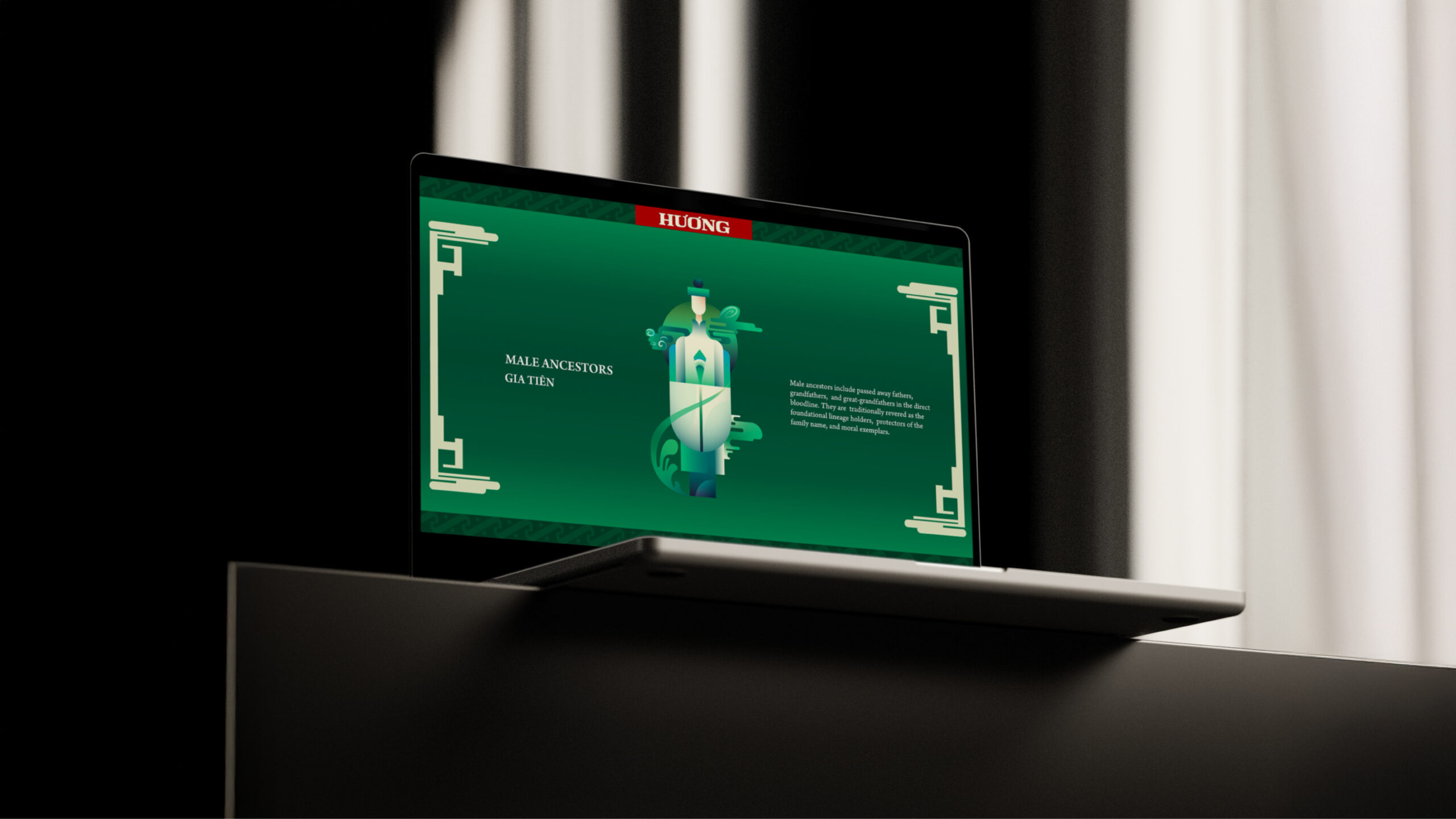
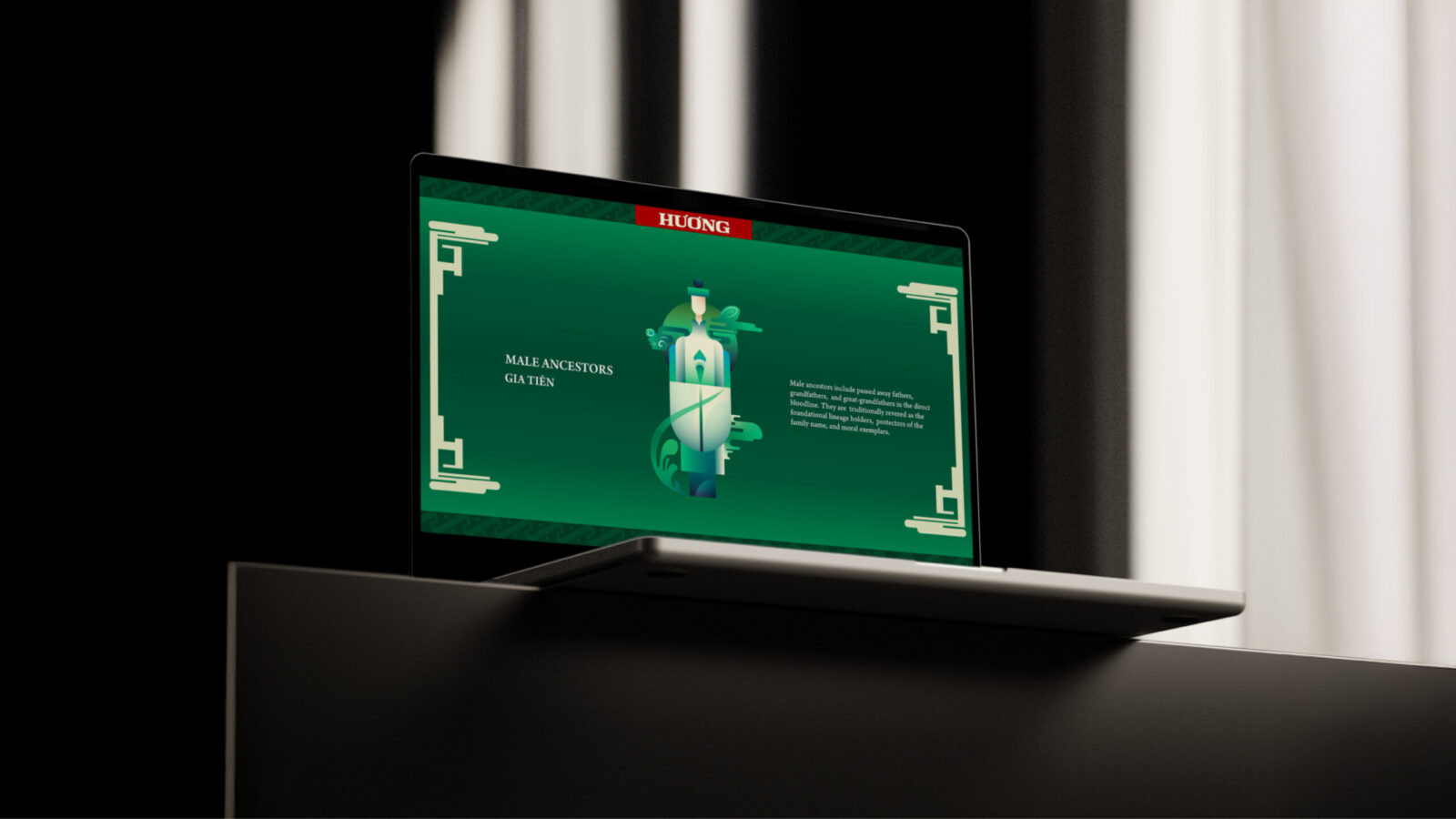
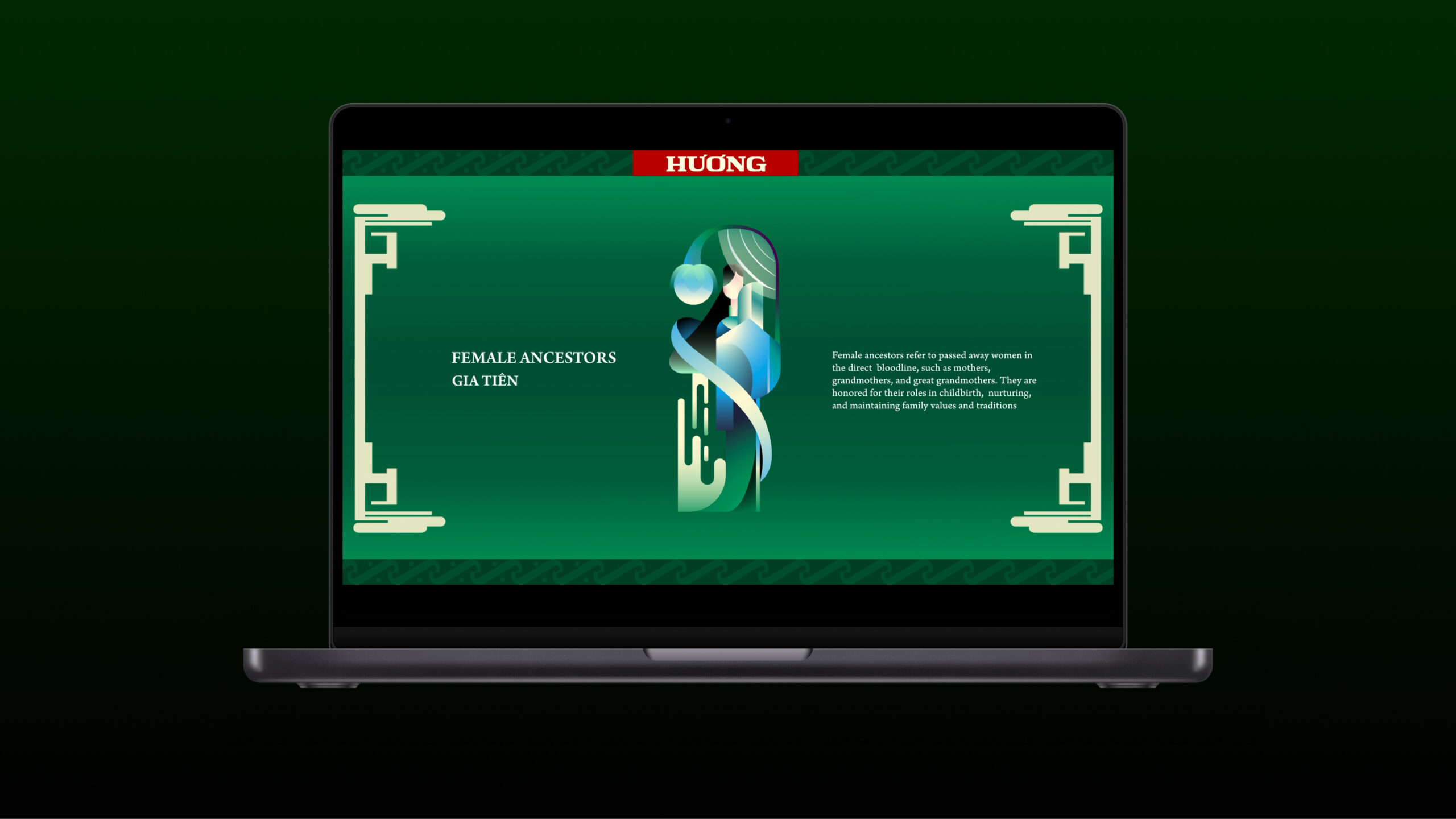
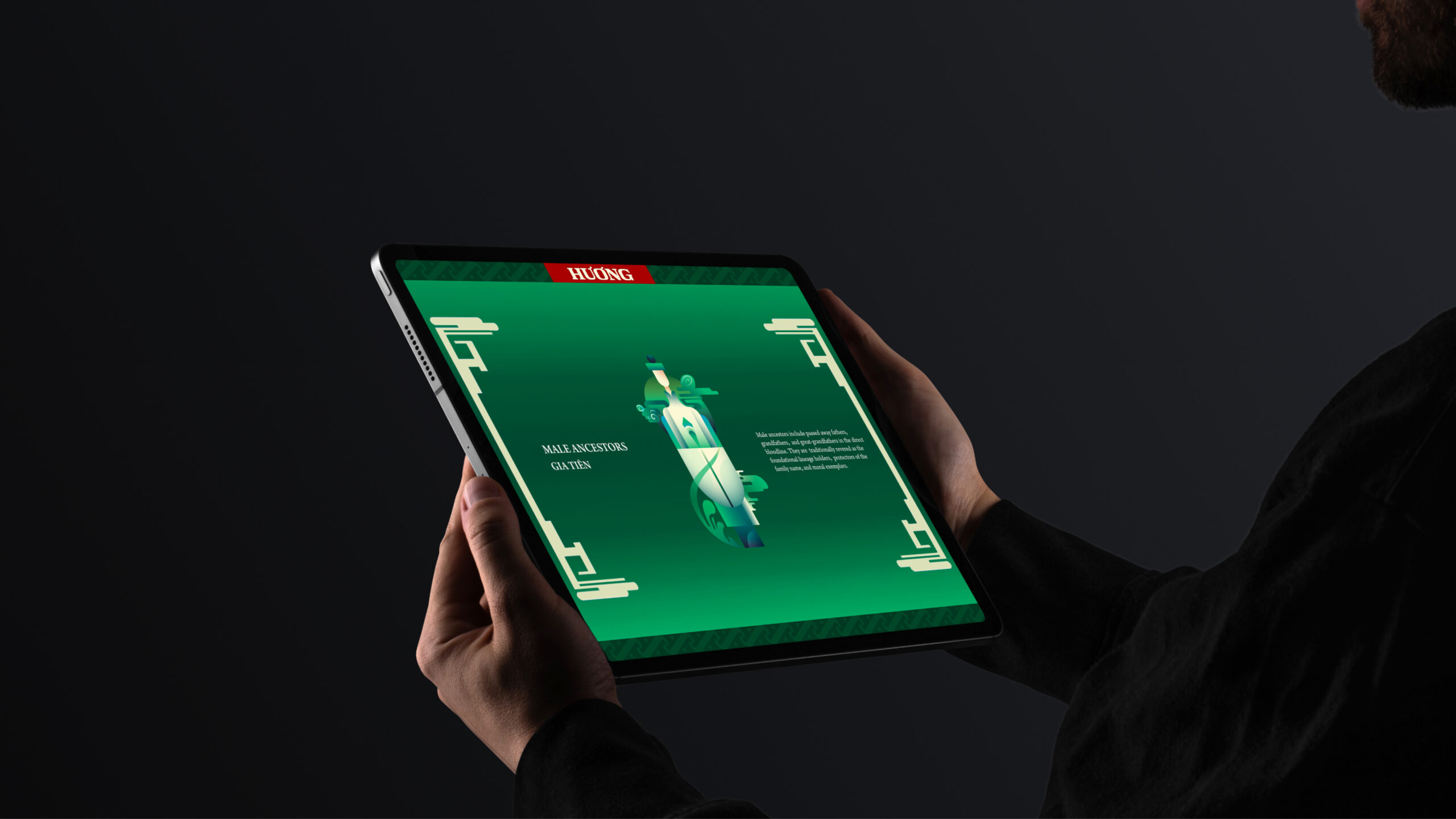
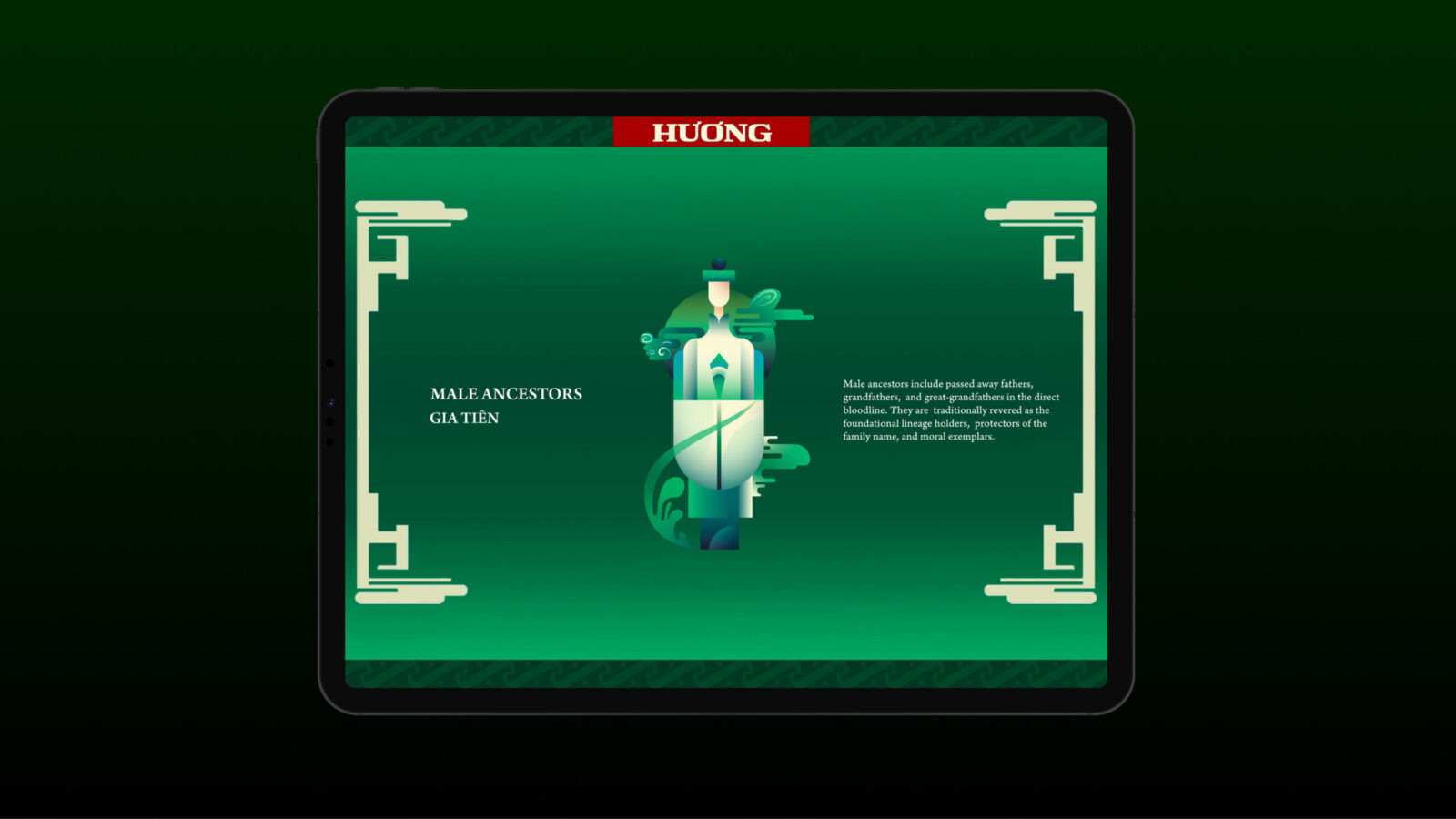
Characters line-up: Inspired by the images of deities and ancestors in Vietnamese worship practices, Hương has created seven characters: two ancestral spirits and three household gods. The ancestral line includes deceased relatives who protect and bless their descendants. The divine line comprises three deities commonly found on the altar: Kitchen God (Táo Quân), who oversees family life, reports it to the Jade Emperor, and brings prosperity; the God of Wealth (Thần Tài), who brings luck and riches; and the Earth God (Thổ Công), the guardian of the house and family assets. These are figures that worship practices revolve around lighting incense for.
Gặp (Reunion) Interactive Website:
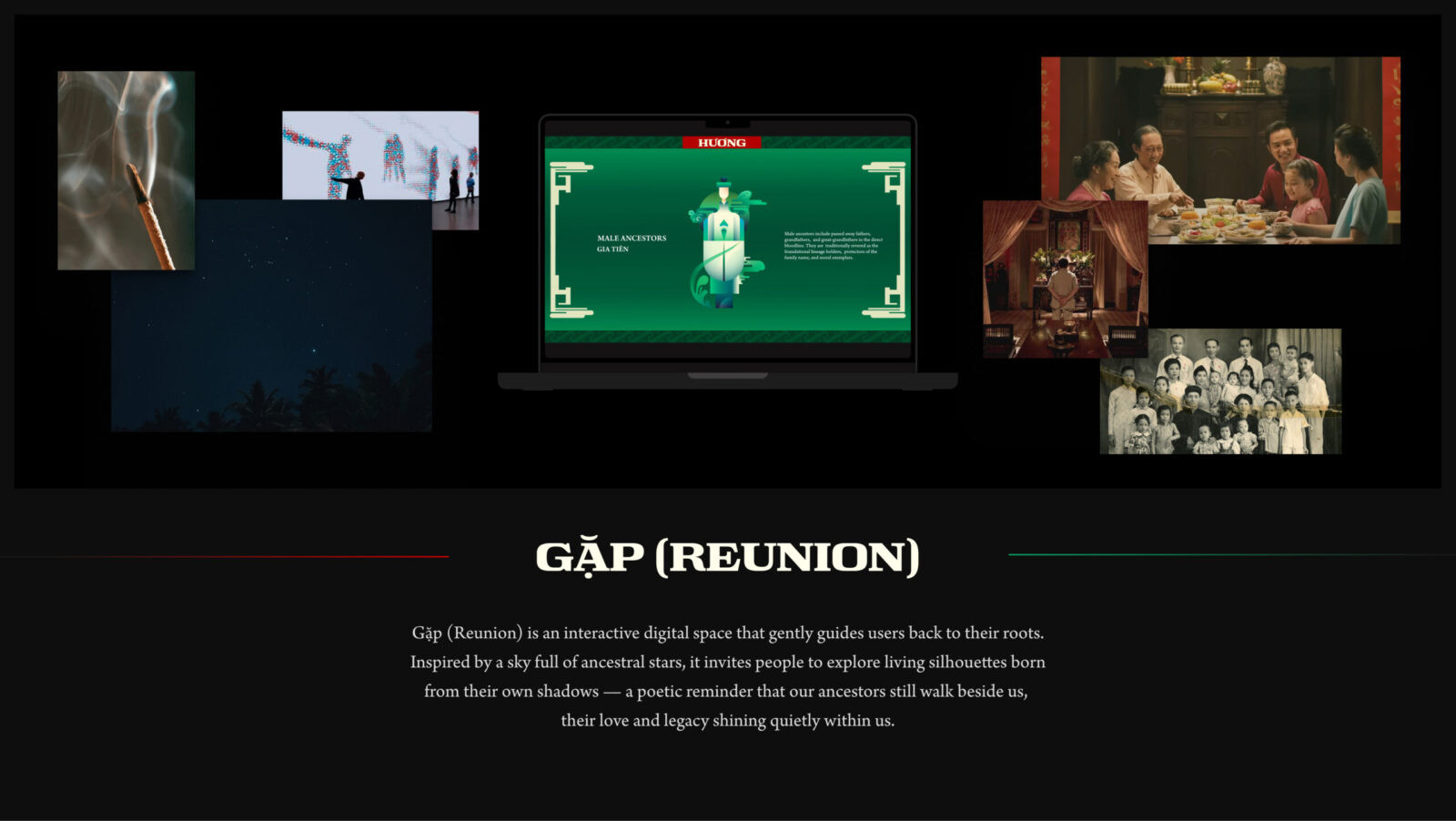
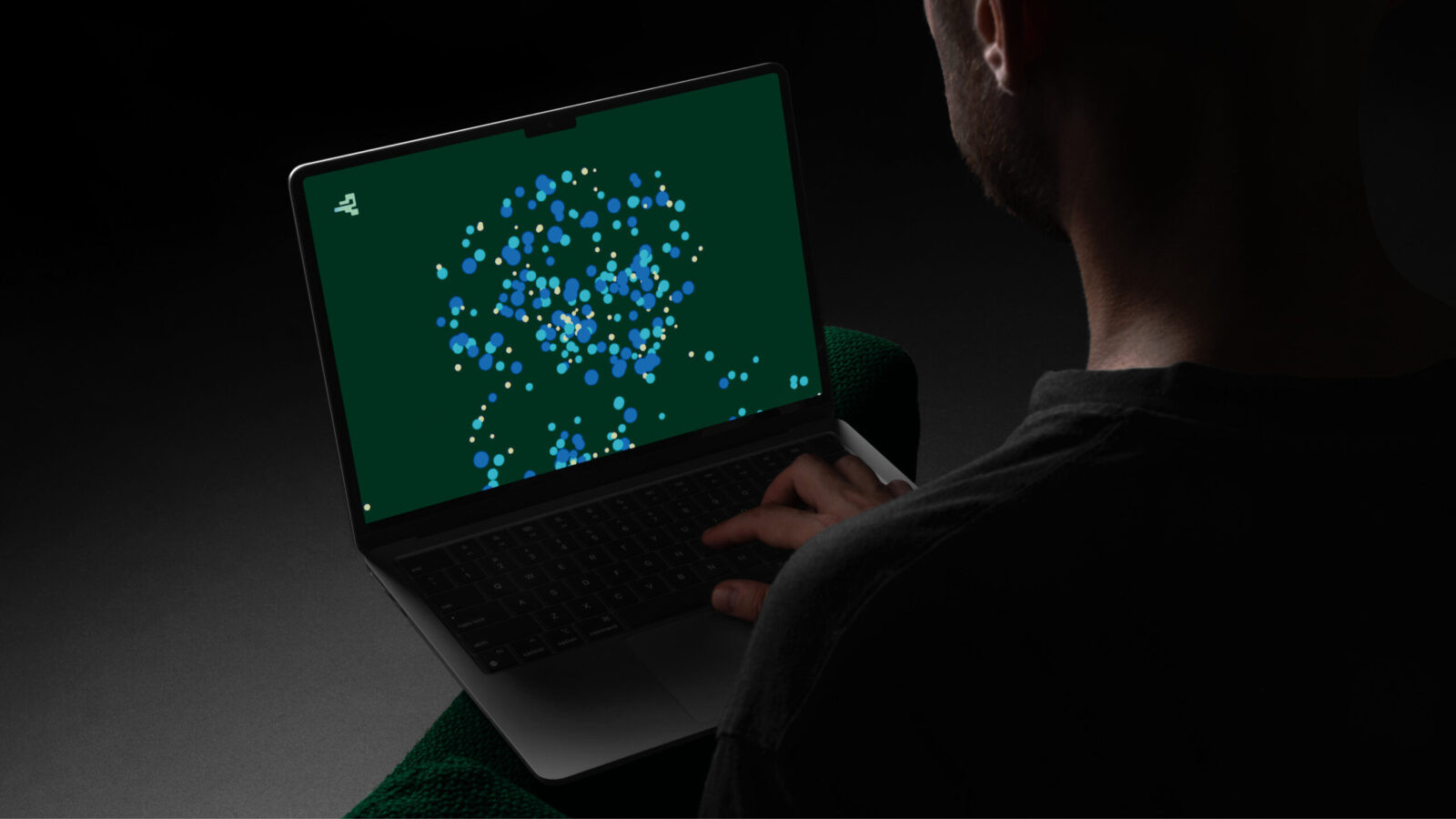
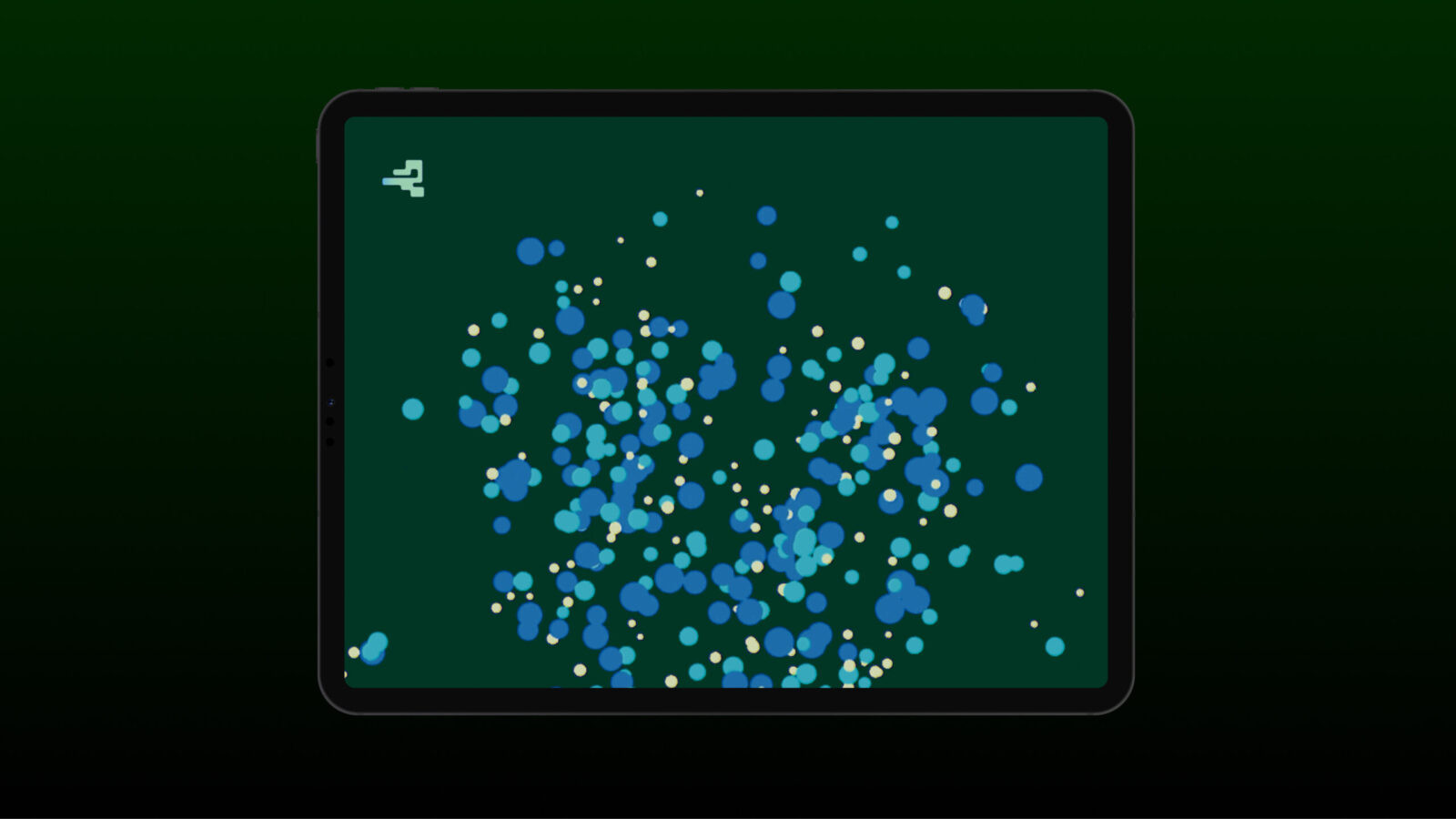
Purpose & Function: Gặp (Reunion) was created as a profoundly interactive experiential space, a digital bridge bringing users back to their sacred roots. Going beyond merely introducing the cultural figures on the packaging, it allows users to “interact” and “explore” silhouettes – symbolic shadows of their own ancestors and passed-away loved ones. Through this, the website helps them deeply feel that their roots are ever-present and that their ancestors are always by their side.
Inspiration: The primary design inspiration comes from the sparkling image of a thousand stars in the sky, symbolizing the eyes of ancestors who are still silently watching over and protecting them. The website’s most unique feature lies in the fact that the ancestral silhouette itself is inspired by the user’s own shadow. This is because the form of today’s generation is the living crystallization of the many, many preceding generations who lived, loved, and strived.

CREDIT
- Agency/Creative: Huy Nguyen, Thanh Nguyen, An Do, Linh Bui, Mai Phuong Le, Thien My Bui
- Article Title: Students Present Gặp Reunion as an Interactive Platform Rooted in Ancestral Connection
- Organisation/Entity: Student
- Project Status: Non Published
- Agency/Creative Country: Viet Nam
- Agency/Creative City: Ho Chi Minh City
- Market Region: Vietnam
- Project Deliverables: 2D Design, Art Direction, Brand Experience, Character Design, Creative Direction, Design, Digital Art, Interaction Design, Research, User Interaction, Web Design, Writing
- Industry: Retail
- Keywords: WBDS Student Design Awards 2025/26 , Renovative, Original, Respect, Nostalgic, Mythical
-
Credits:
Educational Institution : Lehigh University
Educational Institution : Van Lang University
Educational Institution : RMIT University Vietnam
Educational Institution : Ho Chi Minh City University of Architecture
Educational Institution : Hanoi National University of Education
Educational Institution : Foreign Trade University









