




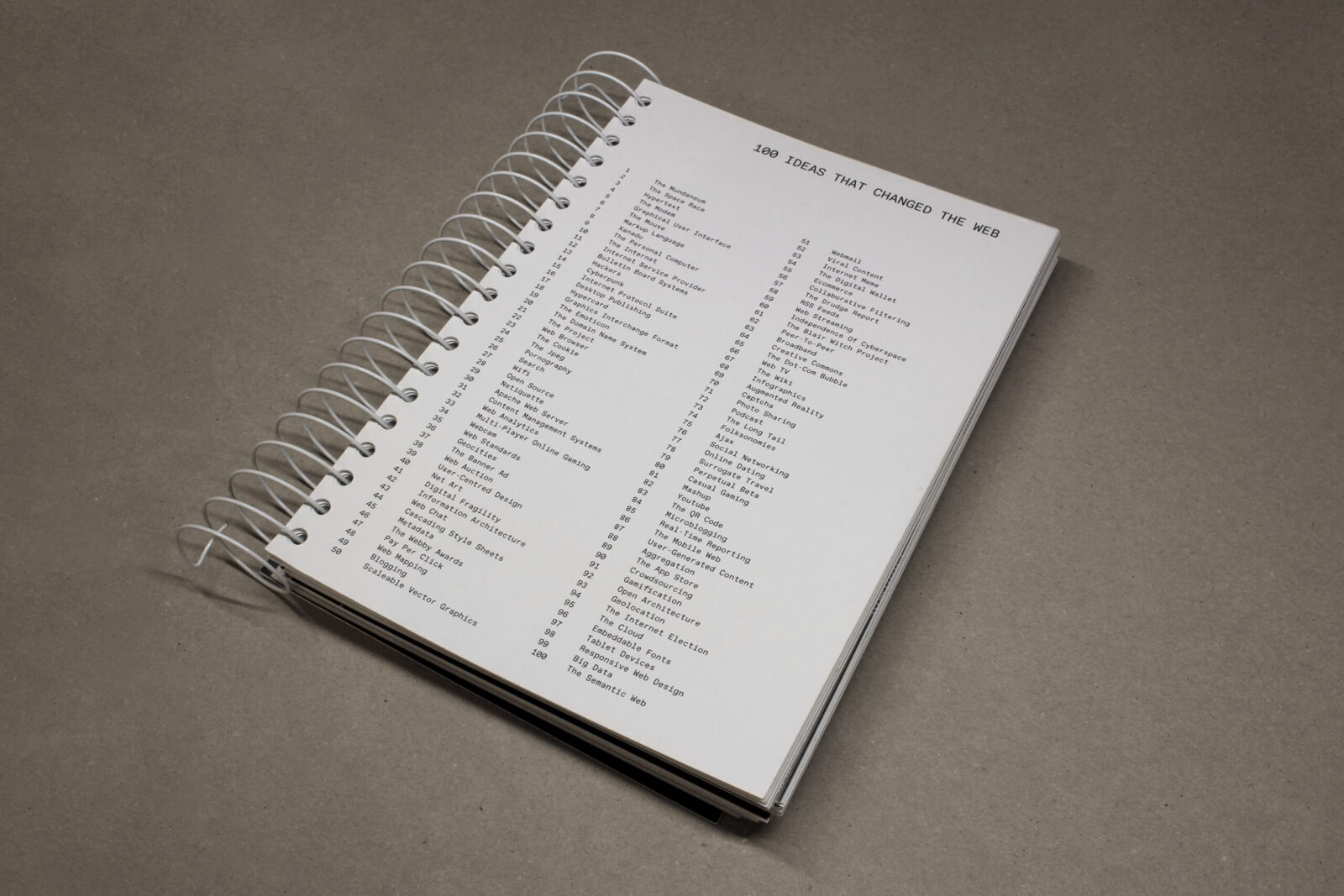
This publication focuses on the evolution of the World Wide Web, using content adapted from ‘100 Ideas That Changed the Web’ by Jim Boulton to guide both the research and art direction.
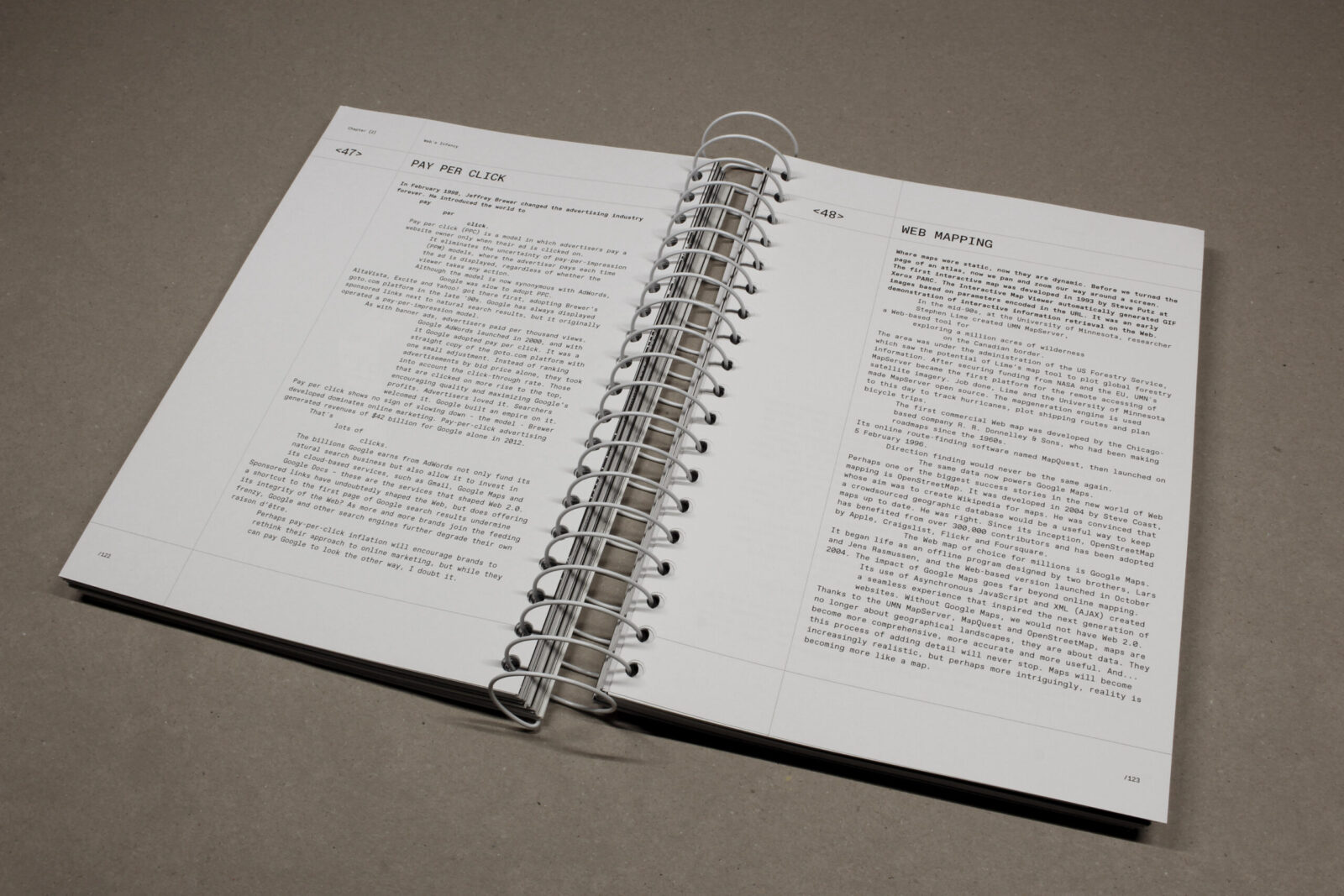
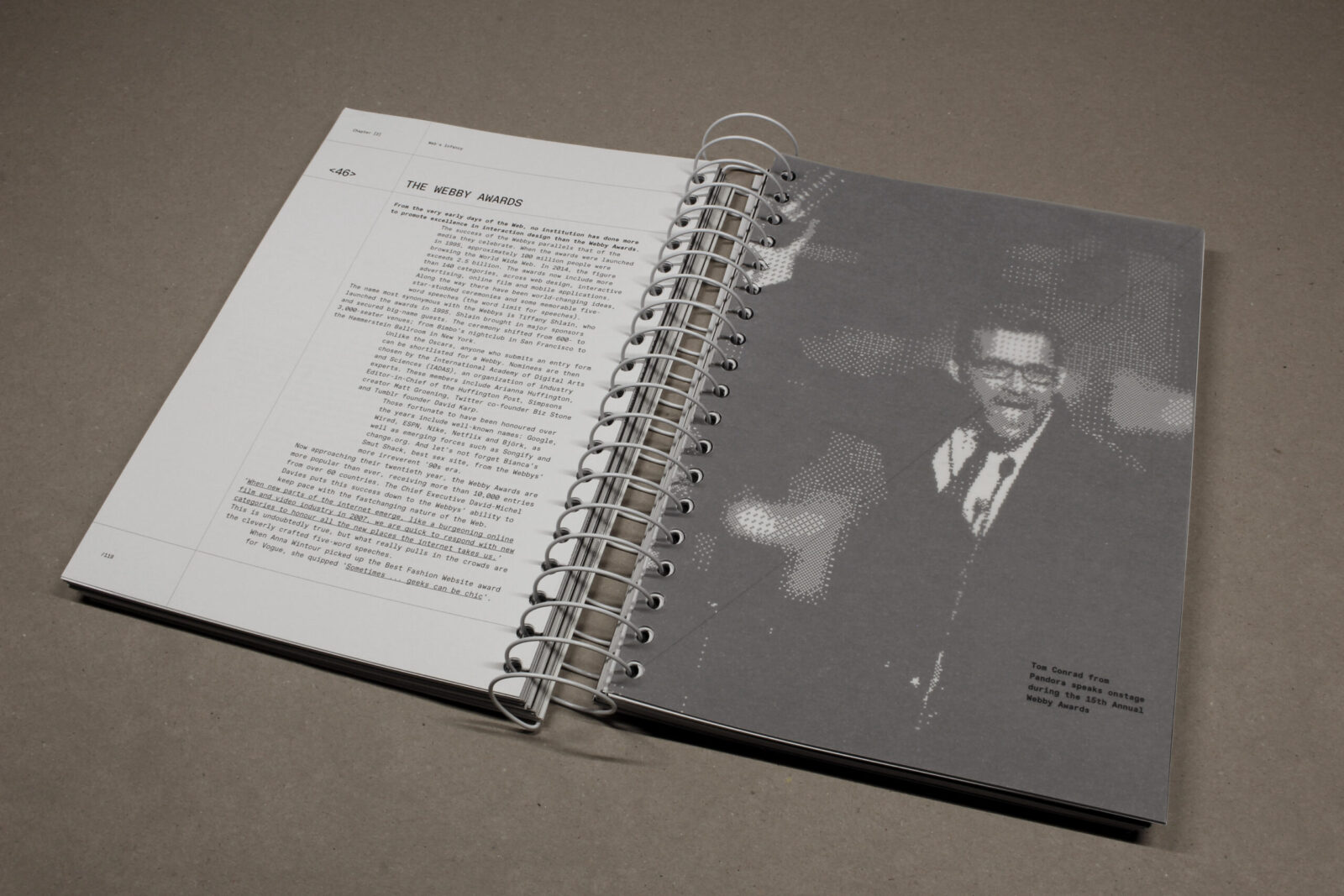
The design concept was informed by an exploration of visual cues embedded within the history of the Web — including early HTML programming, interface evolution, and influential digital design practices. Careful attention was given to how information online has transformed over time, moving from minimalist coding displays to the rich, dynamic environments familiar today. To reflect this transition physically, the publication draws inspiration from 1970s and 1980s computer manuals, combining nostalgic references with contemporary typographic and layout systems.
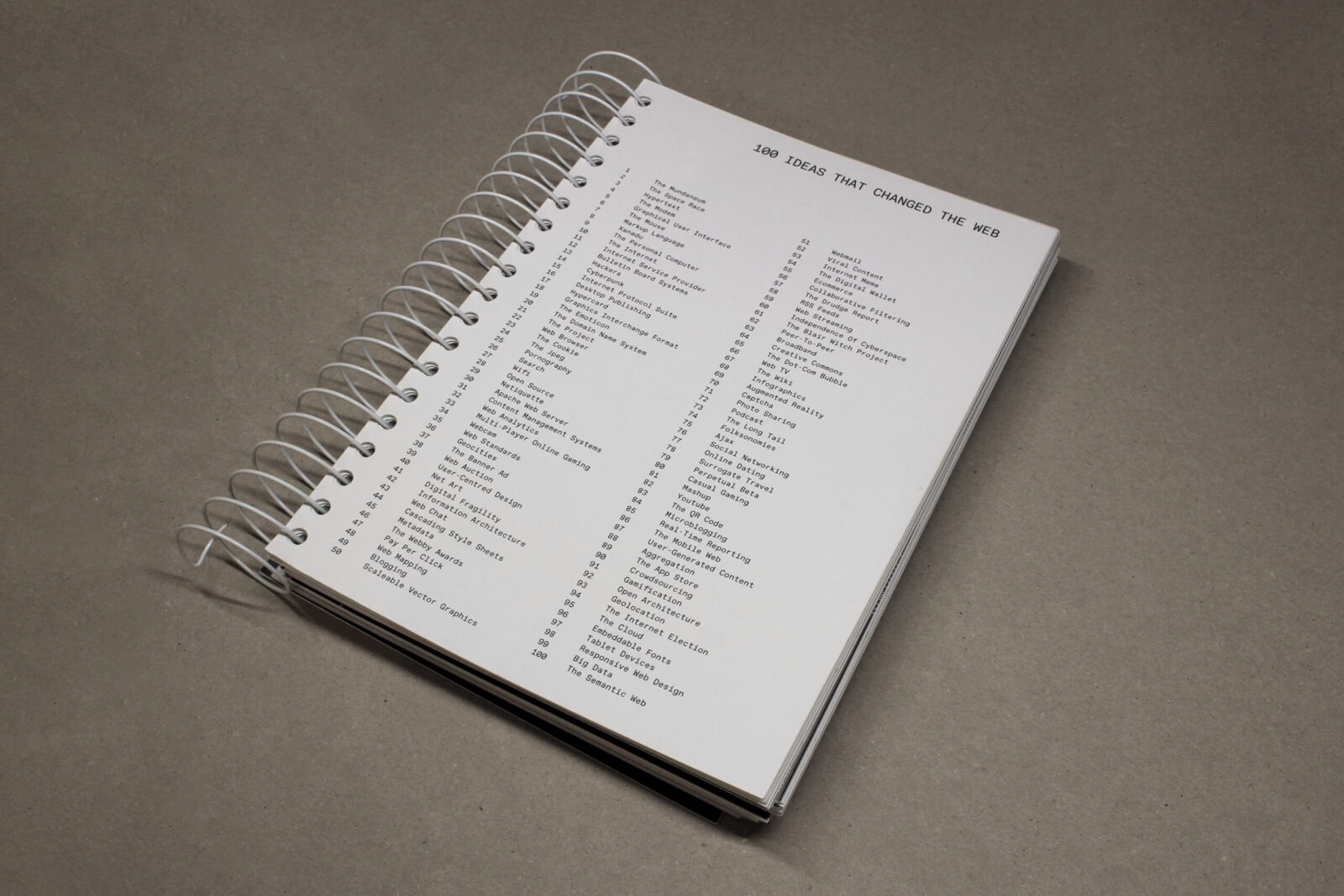
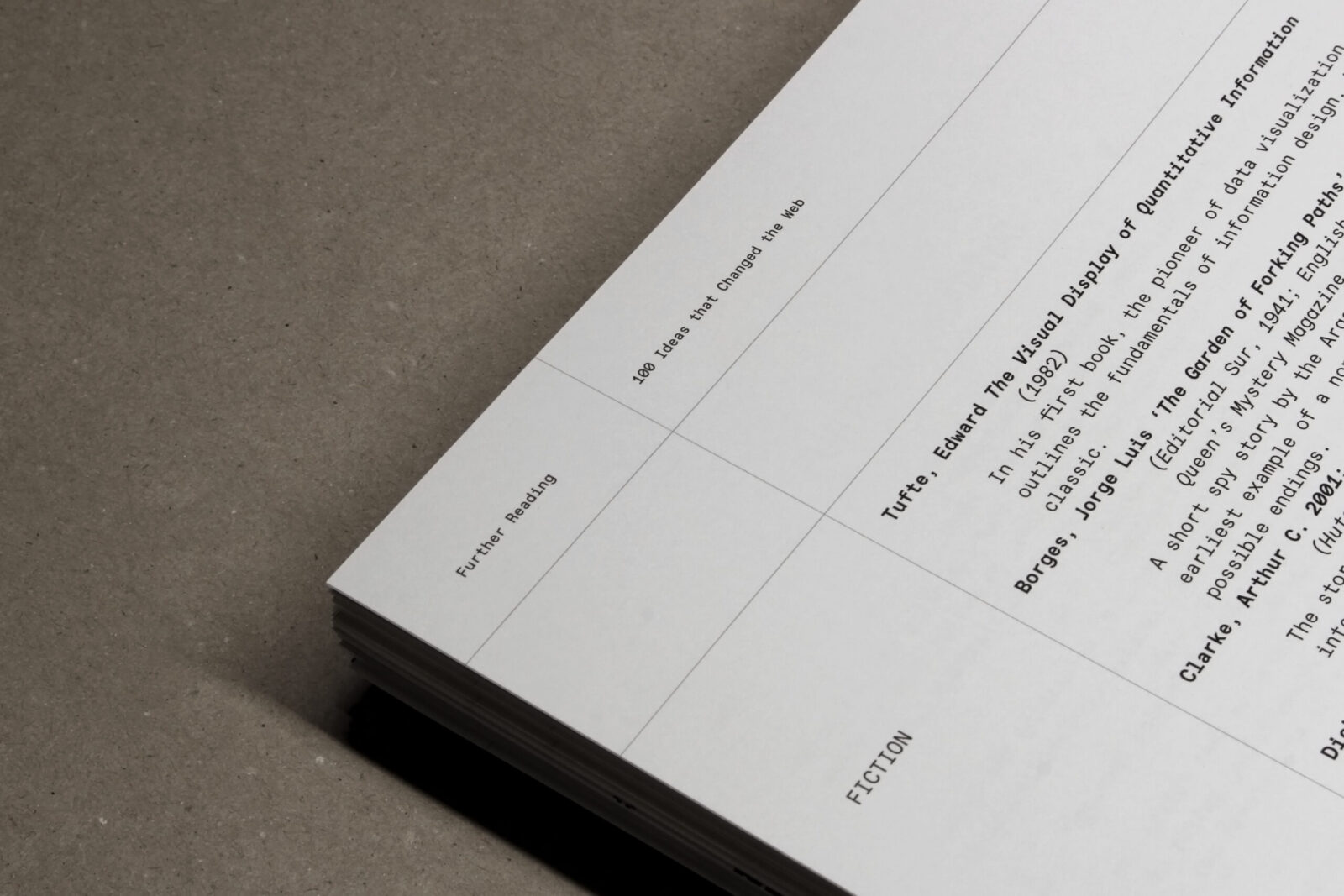
The outcome is a B5 spiral-bound book which is a deliberate nod to manuals from pioneering computing companies such as IBM. The front cover references a traditional index page, immediately establishing a link to archival documentation and technical instruction. Inside, a twelve-column grid informed by CSS layout principles structures the content, allowing the title to occupy the first three columns while the main text spans the remaining nine. This hierarchy ensures clarity while subtly echoing modern web design frameworks.
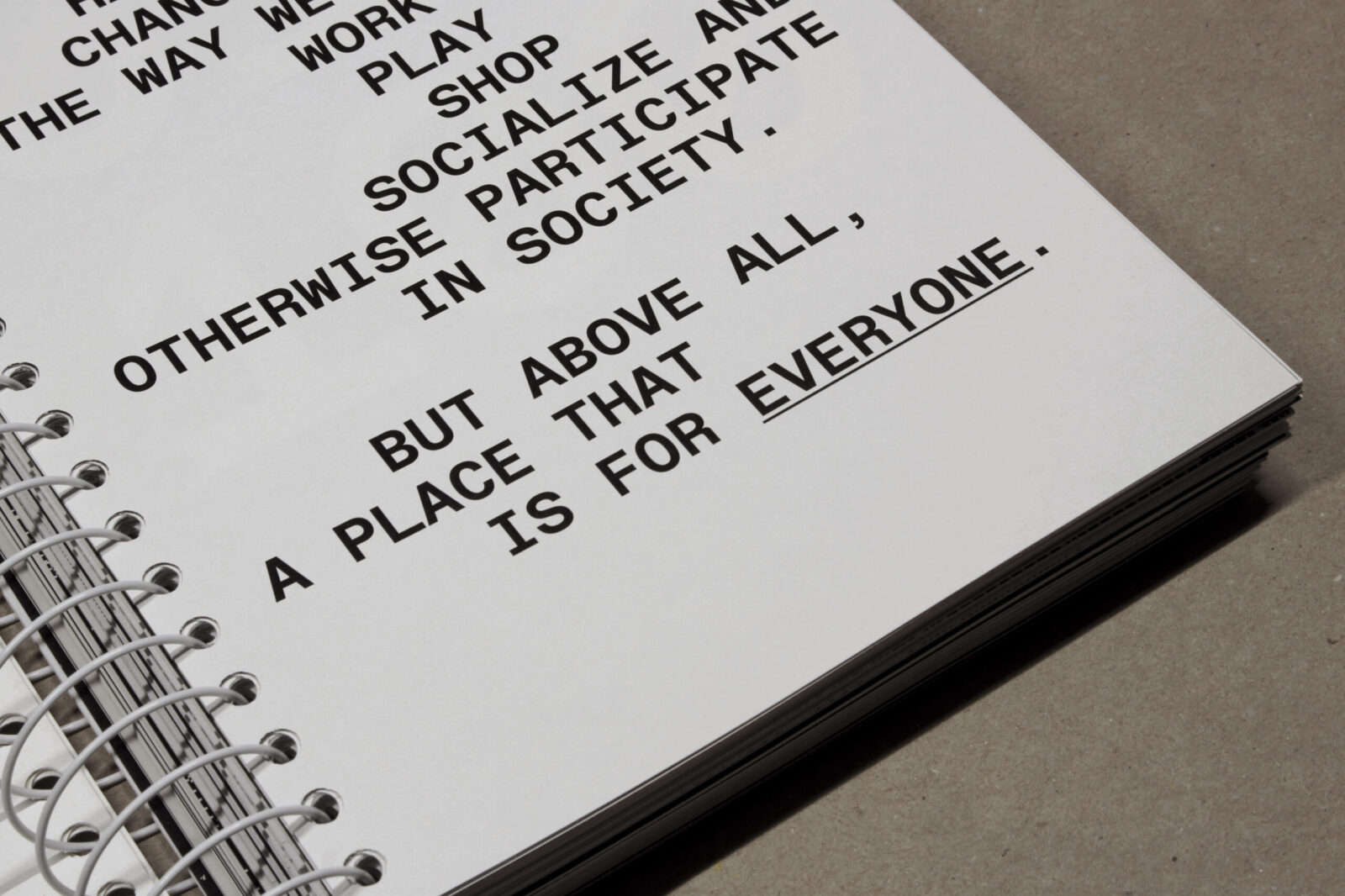
Typography plays a central role in expressing the Web’s progression. A selection of typefaces traces a timeline from typewriter-style monospaced fonts to more flexible and responsive digital type. The inclusion of bolded type for titles and pull-out elements introduces contrast and navigational ease. ‘Favorit Mono’ by Dinamo was used to create cohesive iconography, with small icons embedded within the text to resemble programming syntax. Variations in paper stock — from rough to smooth — provide a tactile representation of the Web’s evolution, while tip-in pages add rhythm and surprise throughout the reading experience.
Overall, the final publication successfully meets the aims of the ISTD brief. It demonstrates rigorous research, typographic experimentation, and strong structural decision-making to celebrate key milestones that have shaped the Web. The result is a visually engaging and intellectually grounded design intended to educate, inspire, and evoke a sense of digital heritage.

CREDIT
- Agency/Creative: Charlotte Chyla
- Article Title: Student Charlotte Chyla Translates Web History Into a Structured and Typographic Book Design
- Organisation/Entity: Student
- Project Status: Non Published
- Agency/Creative Country: United Kingdom
- Agency/Creative City: St Albans
- Market Region: County (optional)
- Project Deliverables: Editorial Design, Graphic Design, Typography
- Industry: Technology
- Keywords: WBDS Student Design Awards 2025/26 , Editorial Design, Typography









