



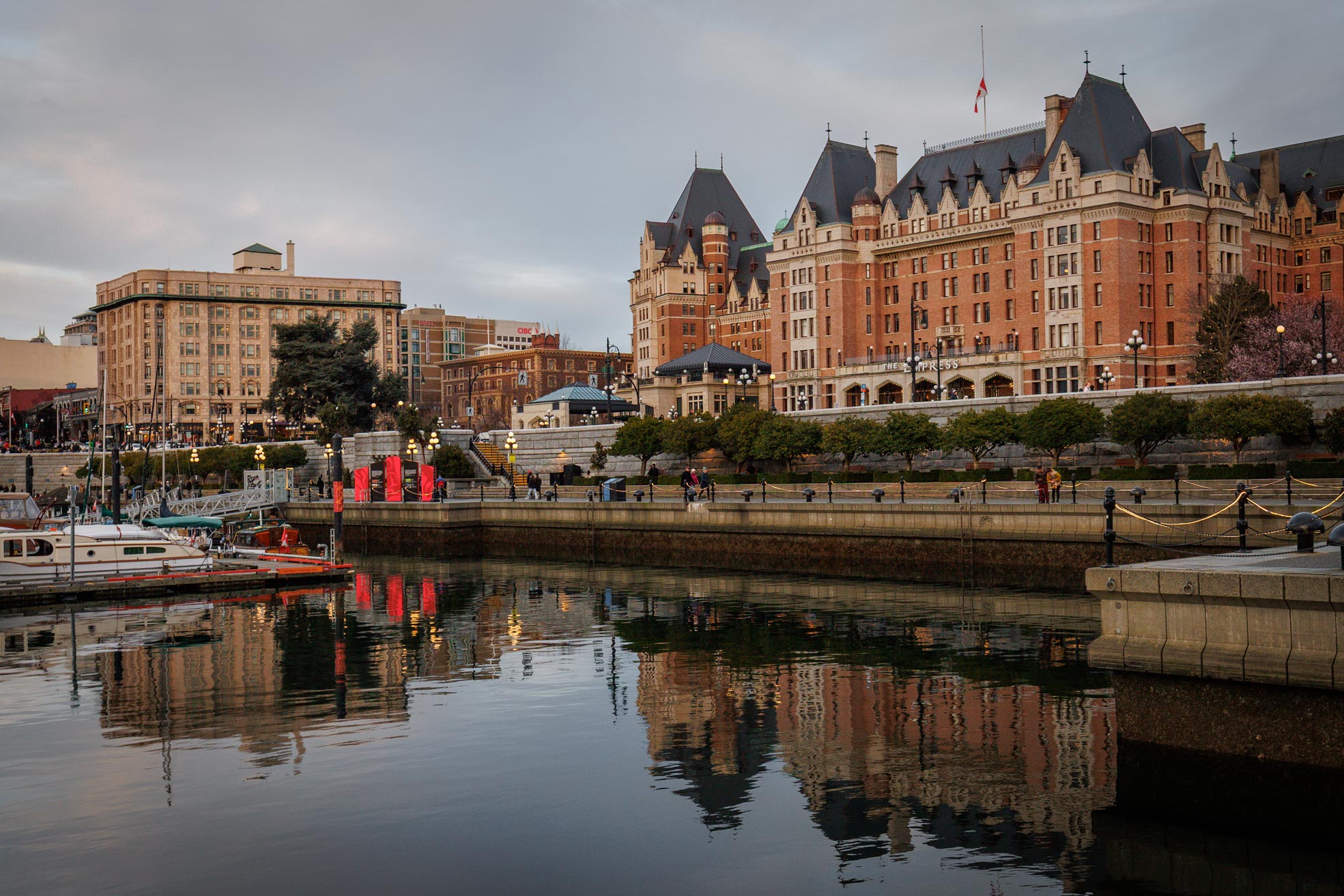
xwsəyq’әm or “the Place of Mud” is an interpretive installation which reclaims and honours a site of profound cultural, ecological, and historical significance in the inner harbour of Victoria, BC. Long before the causeway and Empress Hotel were built, the area was a tidal wetland teeming with shellfish, crabs, and fish, fed by three freshwater streams. It served as a traditional village site of the lək̓ʷəŋən-speaking Songhees and xʷsepsəm (Esquimalt) Nations, a place of gathering, harvesting, and trade for generations.
“This area has been an important meeting place for generations. This location was once the village site of the xʷsepsəm, right where the Legislature building stands today. We’re excited that visitors and residents will have the opportunity to learn about lək̓ʷəŋən culture and the importance of this area to our people.” – Chief Jerome Thomas, xʷsepsəm Nation
The xwsəyq’әm interpretive installation is the latest collaboration between Lost & Found Design and the Greater Victoria Harbour Authority (GVHA) in partnership with Songhees and xʷsepsəm Nations, it is part of an ongoing, community-led initiative to incorporate lək̓ʷəŋən culture, language, and history into the fabric of Victoria’s Inner Harbour.
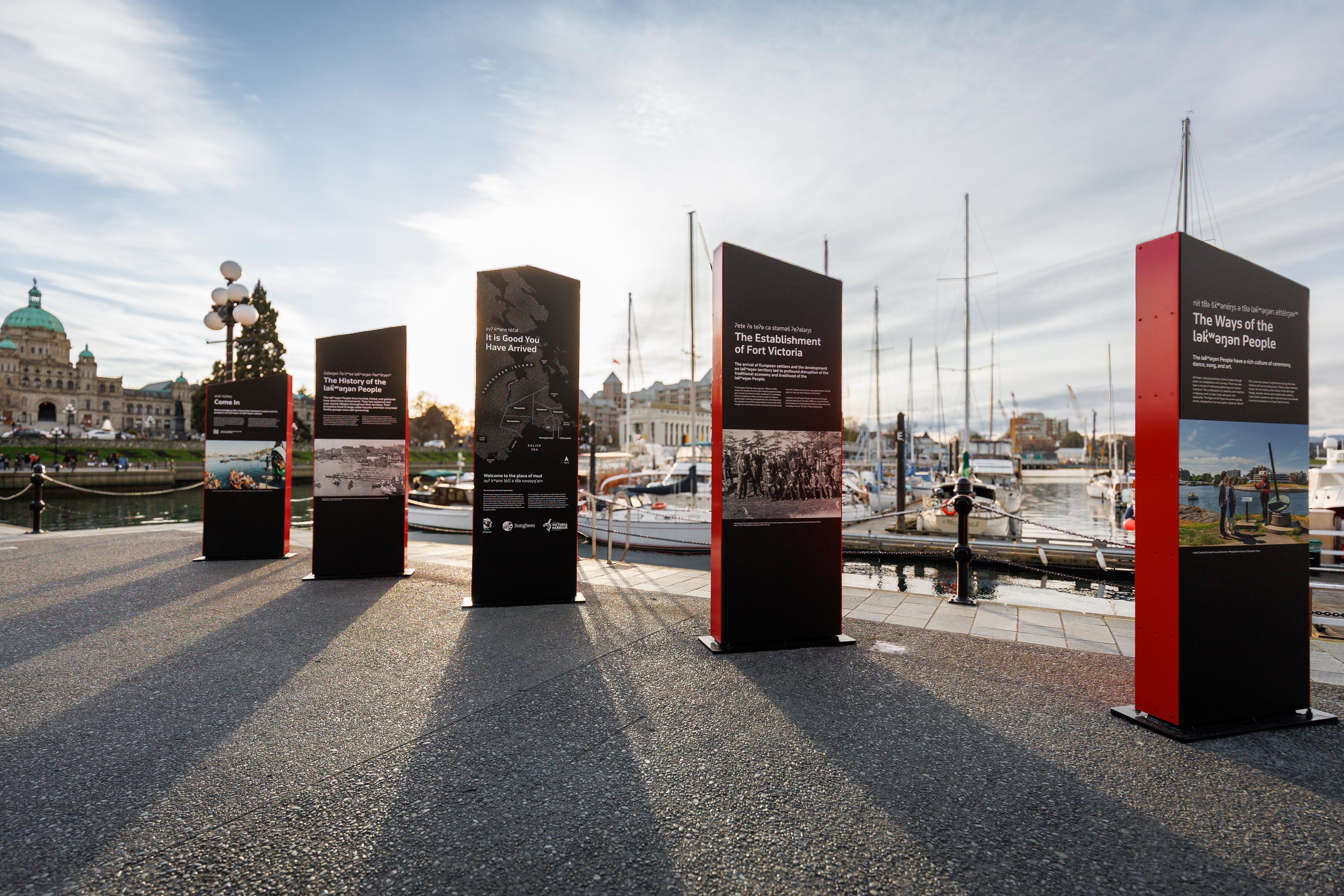
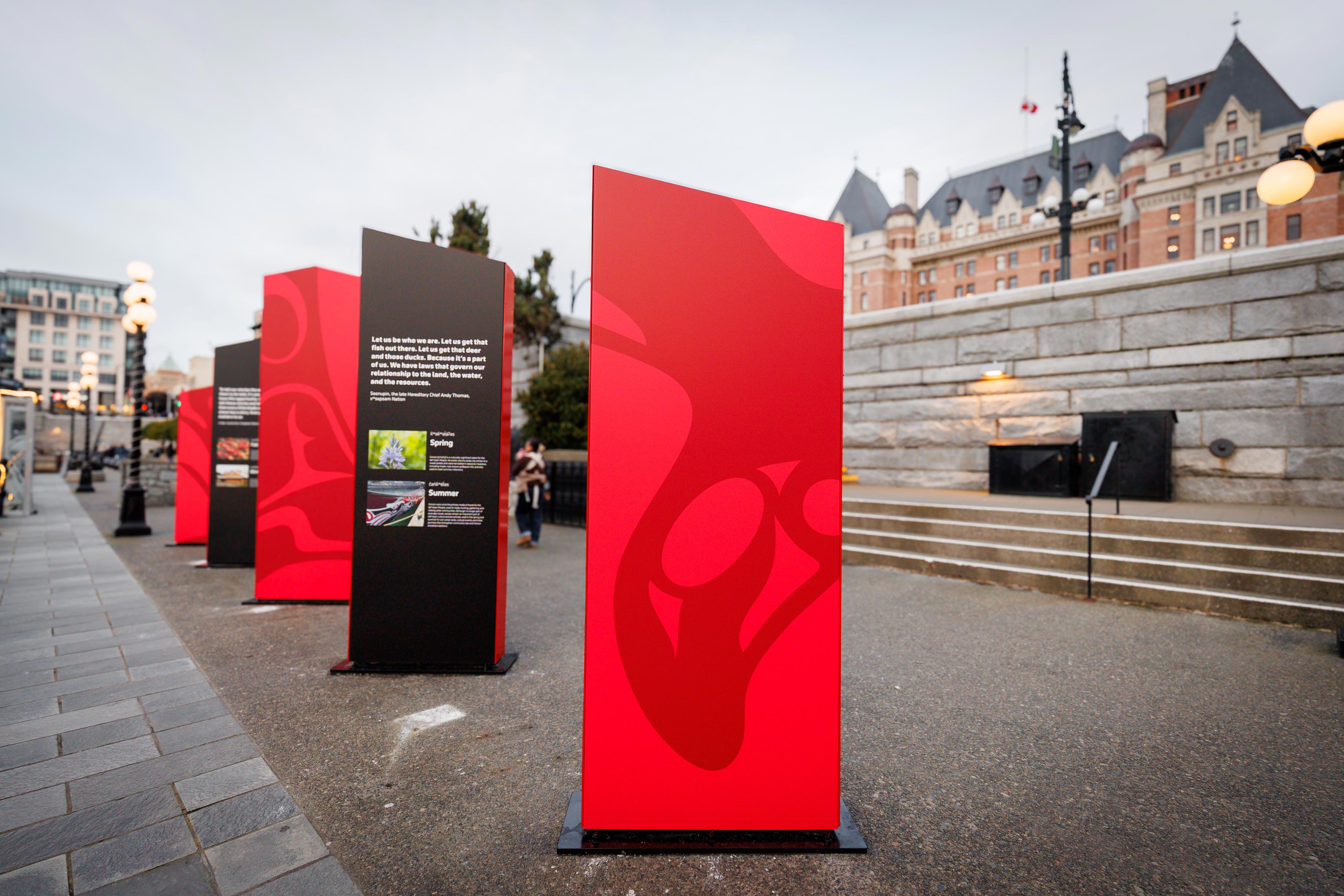
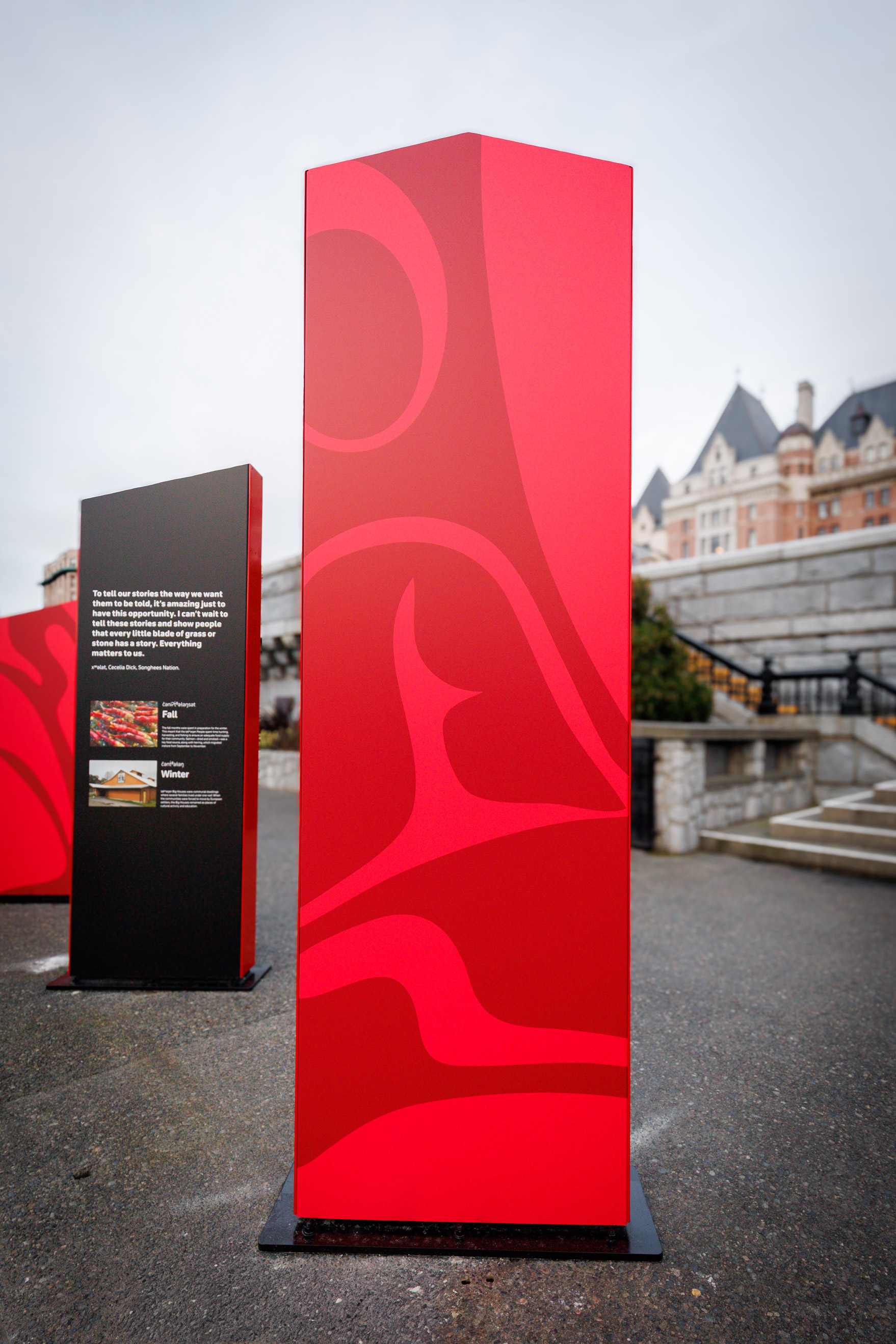
Through a collaborative design process with the GVHA and artists and communication teams from both Nations, Lost & Found translated the form of the traditional and distinctive Big House (Longhouse) into a contemporary, durable steel silhouette – abstract enough to avoid literal replication, yet immediately recognizable in profile. The core concept inspiring the design was to symbolically return the Big House to the Inner Harbour – to the very shores where these structures once stood before European settlement displaced the lək̓ʷəŋən People from their village at xwsəyq’әm.
“I think the more awareness you create, the less indifference you have. It’s a long process, and it follows reconciliation. You have to keep revisiting that because people let it slide after a while.” – Butch Dick (Yux’wey’lupton), Artist, xʷsepsəm Nation
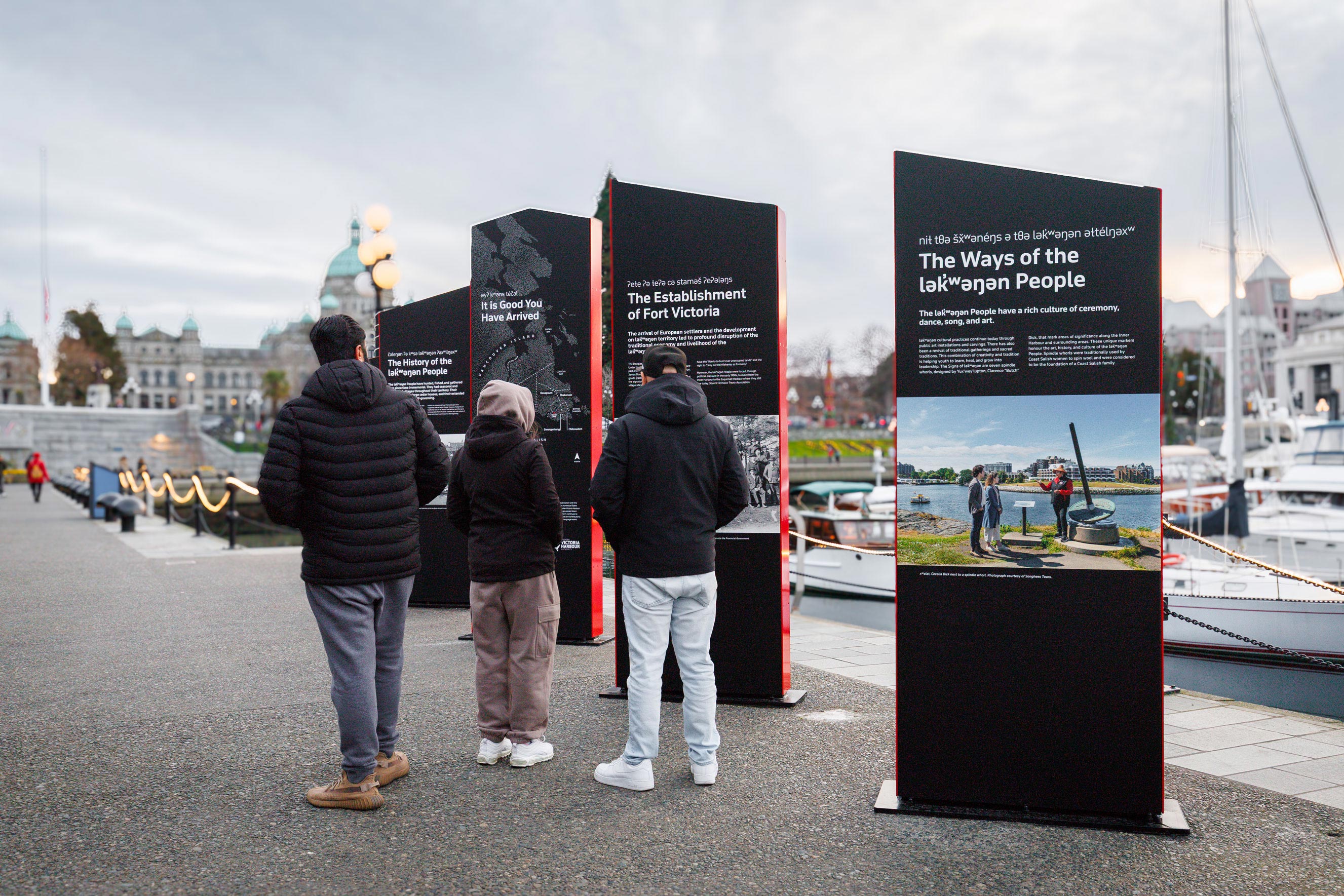
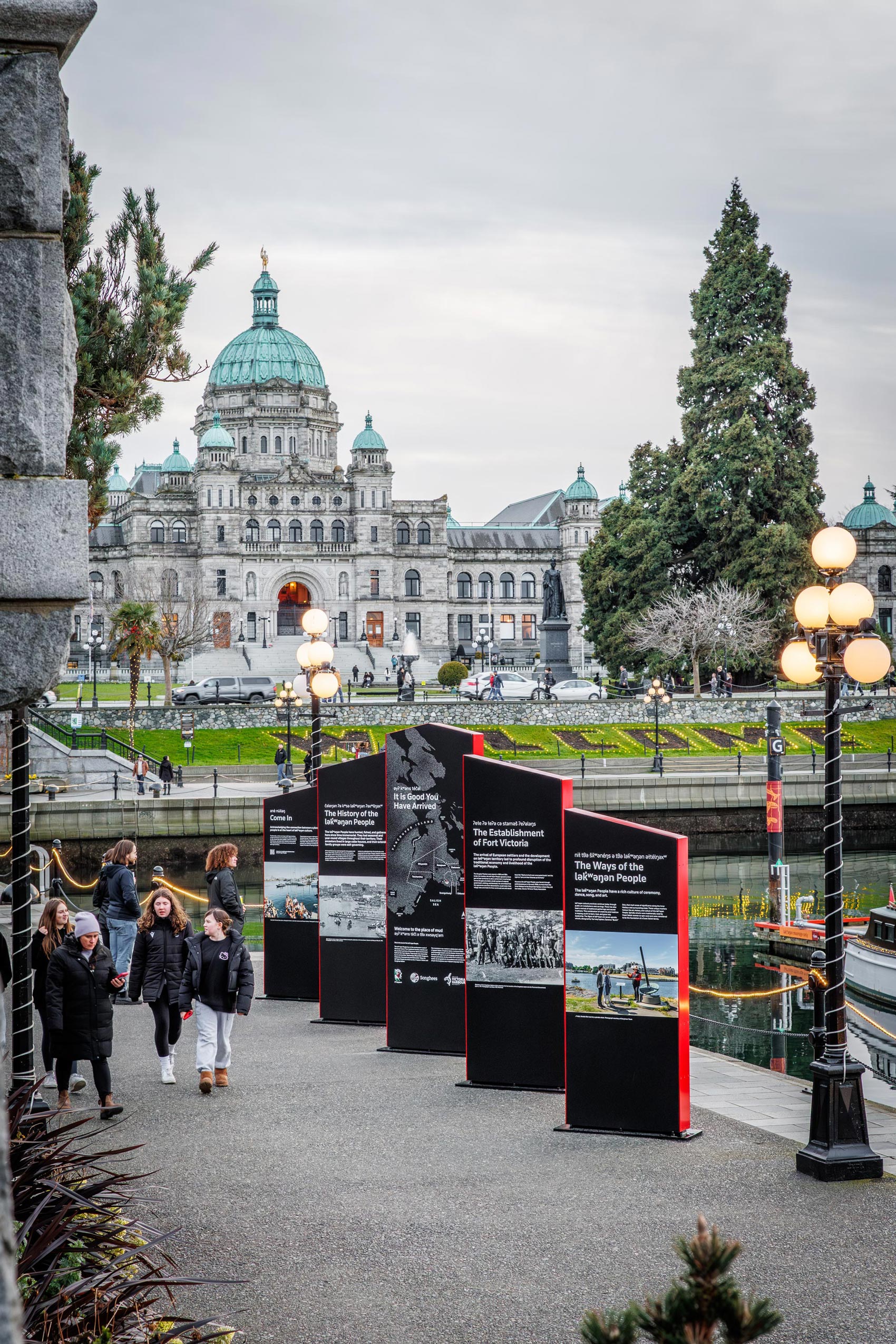
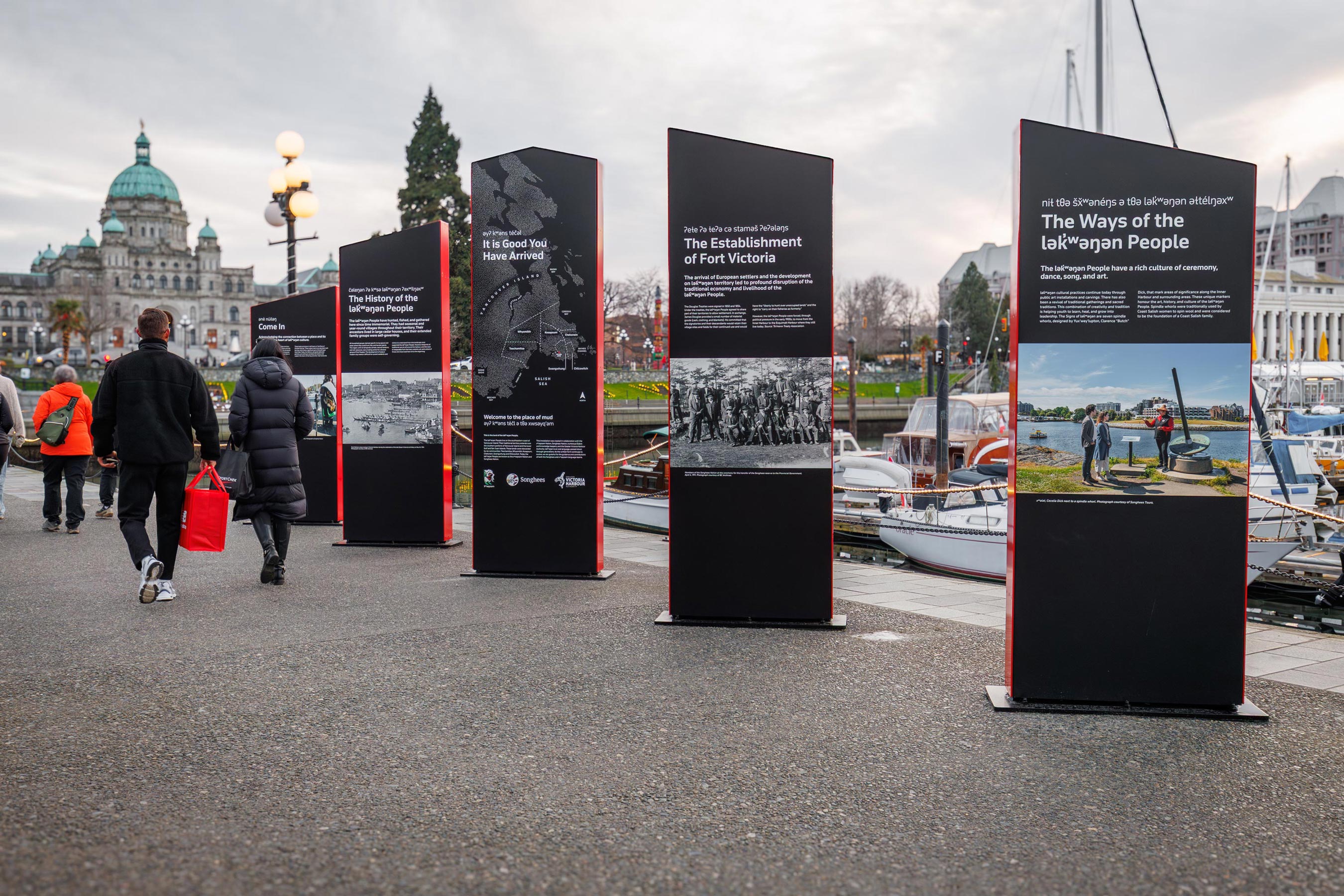
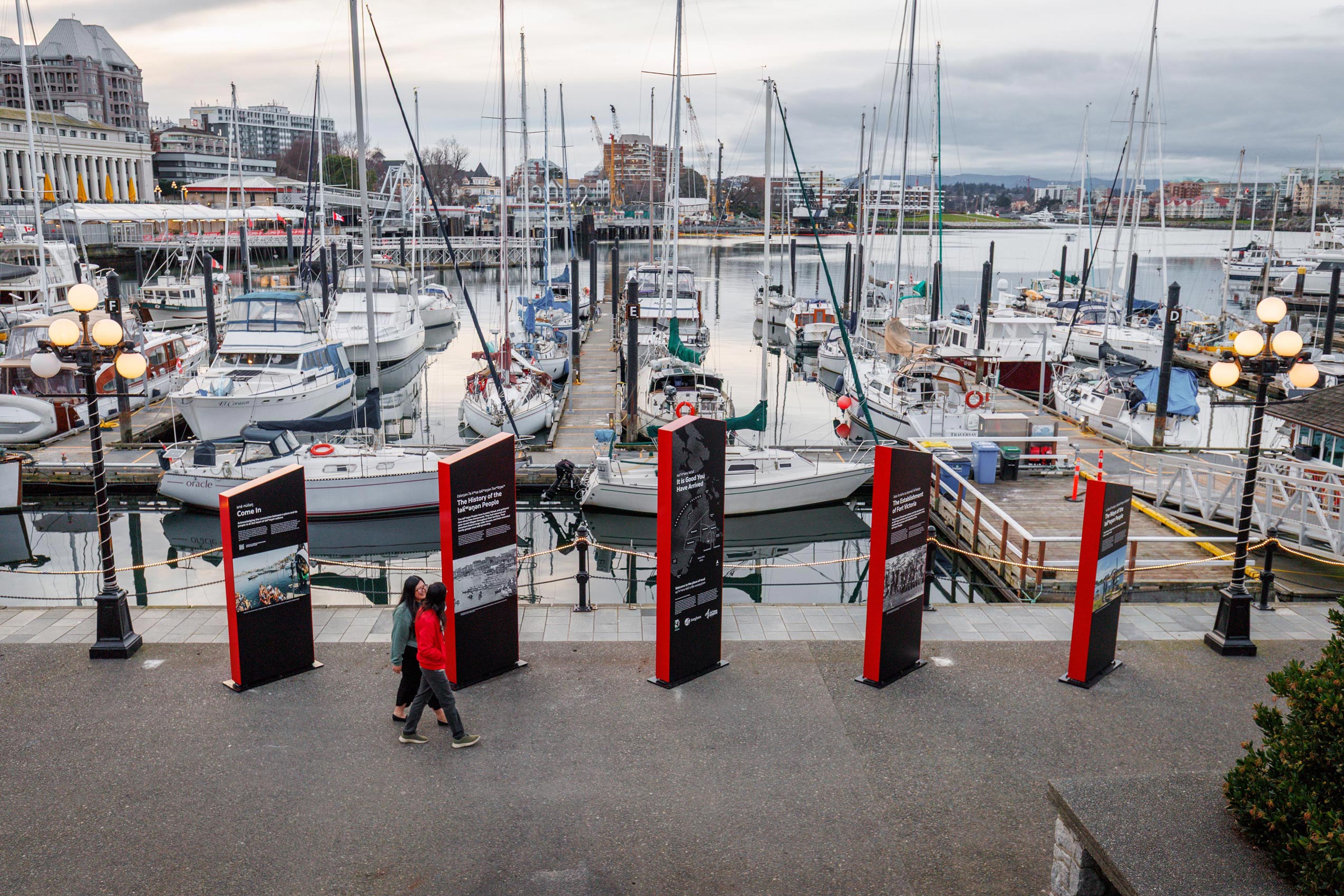
The placement of the five structures on the Lower Causeway is intentional and poetic. By bringing the silhouette of the Big House back to this waterfront, the installation asserts the continued presence and living culture of the lək̓ʷəŋən People on their traditional lands, in a space that millions of residents and visitors move through each year. Oriented to engage pedestrian movement and sightlines toward the harbour, the installation creates moments of reflection along the waterfront. And the repetition of form establishes rhythm and presence without overwhelming the space, allowing the structures to assert visibility while maintaining permeability and openness.
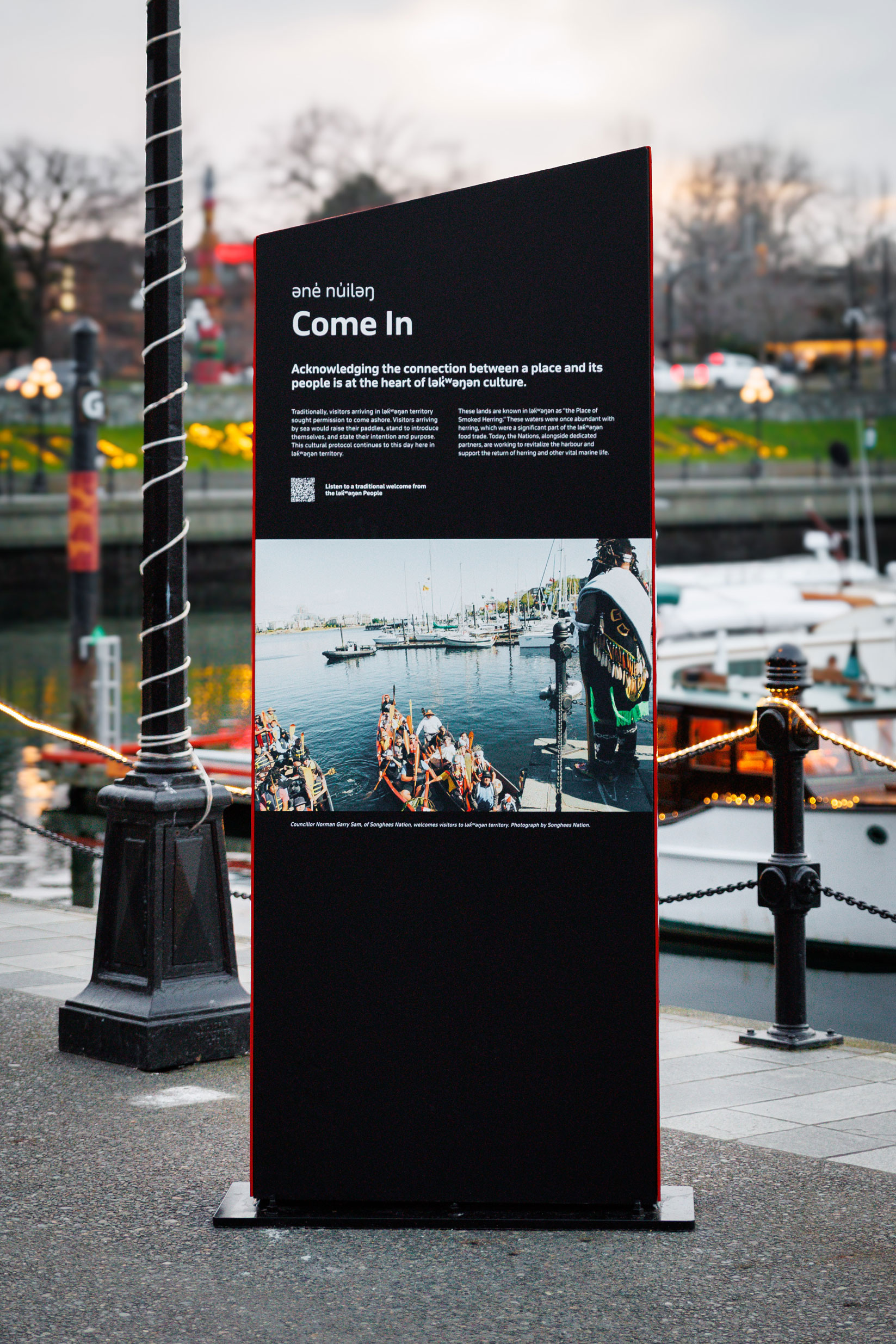
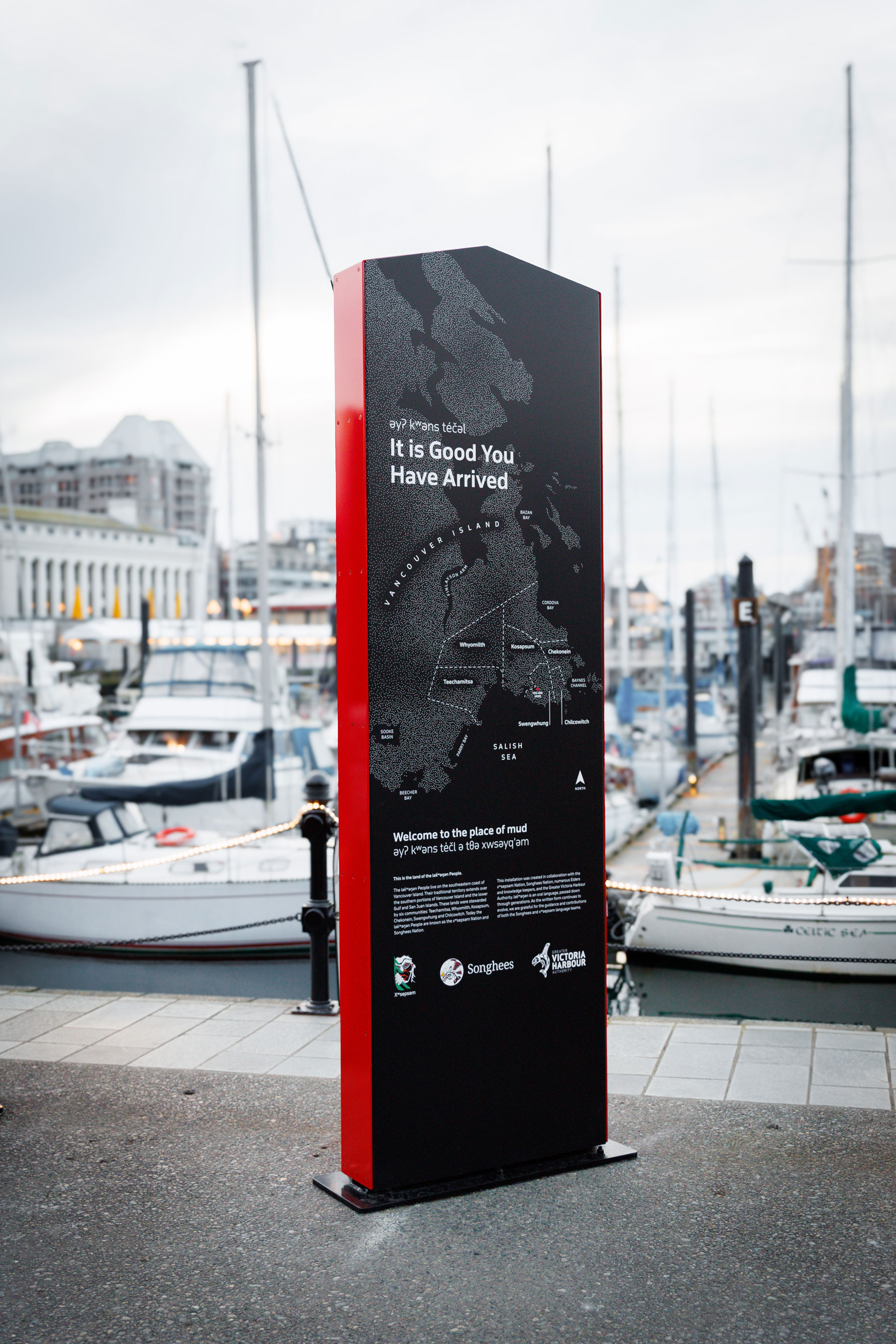
The purpose of this placemaking project was to centre the lək̓ʷəŋən People, their language, their history, their relationship to the land and water, and their vibrant, ongoing culture. The interpretive panels, developed in close collaboration with both Nations, tell these stories in their own words and on their own terms. The panels highlight the lək̓ʷəŋən language, pre-contact history, the arrival of the Hudson’s Bay Company and the building of Fort Victoria in 1843, and the Nations’ enduring living culture of ceremony, dance, song, and art, transforming a high-traffic public space into a place of cultural education, reflection, and recognition.
“I think the collaboration that has come from this project is a good example of nations working together on a community-led project. And it just shows what good collaboration can do.” – Melissa McClurg, Artist, Songhees Nation
CREDIT
- Agency/Creative: Lost & Found Design
- Article Title: Lost & Found Design Honors xwsəyq’әm With a Contemporary Waterfront Installation Rooted in lək̓ʷəŋən History
- Organisation/Entity: Agency
- Project Type: Spatial
- Project Status: Published
- Agency/Creative Country: Canada
- Agency/Creative City: Vancouver
- Market Region: North America
- Project Deliverables: Environmental Graphics, Exhibition Design, Graphic Design, Typography
- Industry: Non-Profit
- Keywords: Placemaking, Environmental Graphic Design, Cultural Visibility
-
Credits:
Principal: Susan Mavor
Senior Associate: Scot Geib
Designer: Elias Lemke
Designer: Jessica Acevedo
Photographer/Videographer: Geoff Webb









