



LEVANTUN: A new 0.0 category is born in Andalusia, uniting gastronomy, design, and Technology.
An alcohol-free umami extract, designed for bluefin tuna, conceived as a precision tool for haute cuisine and created by designer Hugo Zapata.
Andalusia, Spain. LEVANTUN bursts onto the scene as a unique offering within the alcohol-free universe, redefining the category’s boundaries. Conceived and designed by Hugo Zapata, the project doesn’t aim to replace alcoholic beverages, but rather to establish a new typology: a precision umami extract designed to directly enhance the gastronomic product.
Situated at the intersection of gastronomy, design, and biotechnology, LEVANTUN presents itself more as a sensory instrument than a beverage. Its approach aligns it with contemporary haute cuisine, where the packaging, the raw material, and the act of serving are all part of the same experience.
A product designed to be drunk or applied.
LEVANTUN is designed for both direct consumption and application to bluefin tuna dishes. Its application is based on microdosing, with 2 to 4 drops applied directly to fish preparations.
The result is a precise and controlled sensory effect:
* amplification of fat
* prolonging of flavor
* refinement of the finish
With this, LEVANTUN positions itself as a high-precision liquid modulator, designed for fine dining and raw product contexts.
Built from the land: rice and bluefin tuna
The project originates from two key locations in southern Spain:
* Guadalquivir Marshes, the source of the rice that forms the base
* Zahara de los Atunes and Barbate, the land of the levantá and the almadraba
The almadraba is one of the oldest fishing techniques in the world, with roots dating back to the Phoenicians and Romans. This system of fixed nets, installed at strategic points along the Atlantic coast, intercepts the bluefin tuna during its migration, giving rise to a unique moment: the levantá.
During this collective gesture, the fishermen haul in their nets in an action charged with precision, tradition, and tension. That moment, where sea, craft, and memory converge, becomes the conceptual starting point of LEVANTUN.
Composition: From Rice to the Structure of Tuna
From this origin, LEVANTUN develops a layered composition:
Rice Base: A hydrosol that provides volume, smoothness, and a controlled vegetal umami, inspired by the structural logic of sake as a reference point.
Marine Structure: Derived from bluefin tuna:
* Bone marrow: texture and persistence
* Bones: minerality and length
The final profile is defined by three moments: a clean entry, an umami core, and a long, mineral finish.
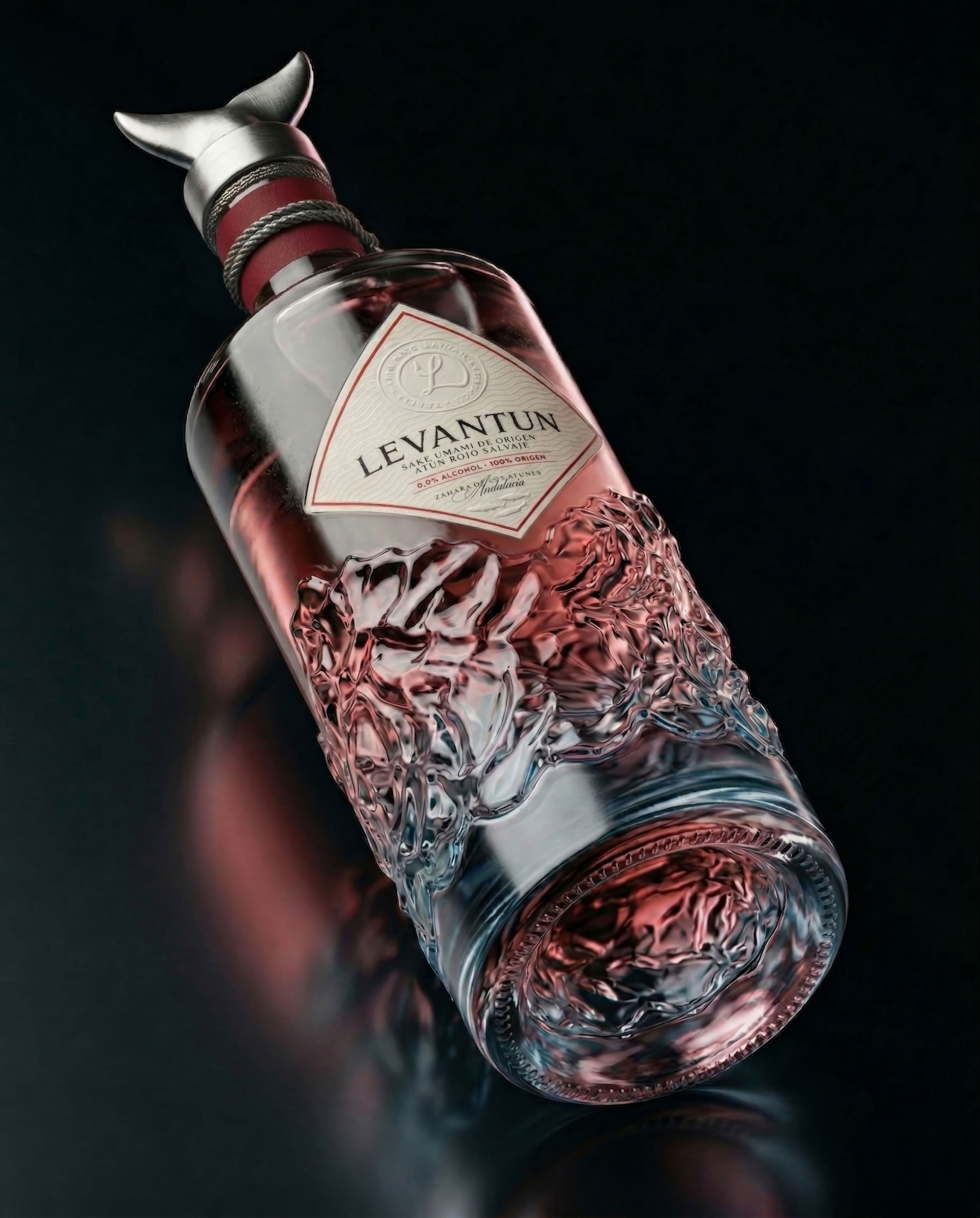
Structural Design: The Bottle as an Interpretation of the Lifting
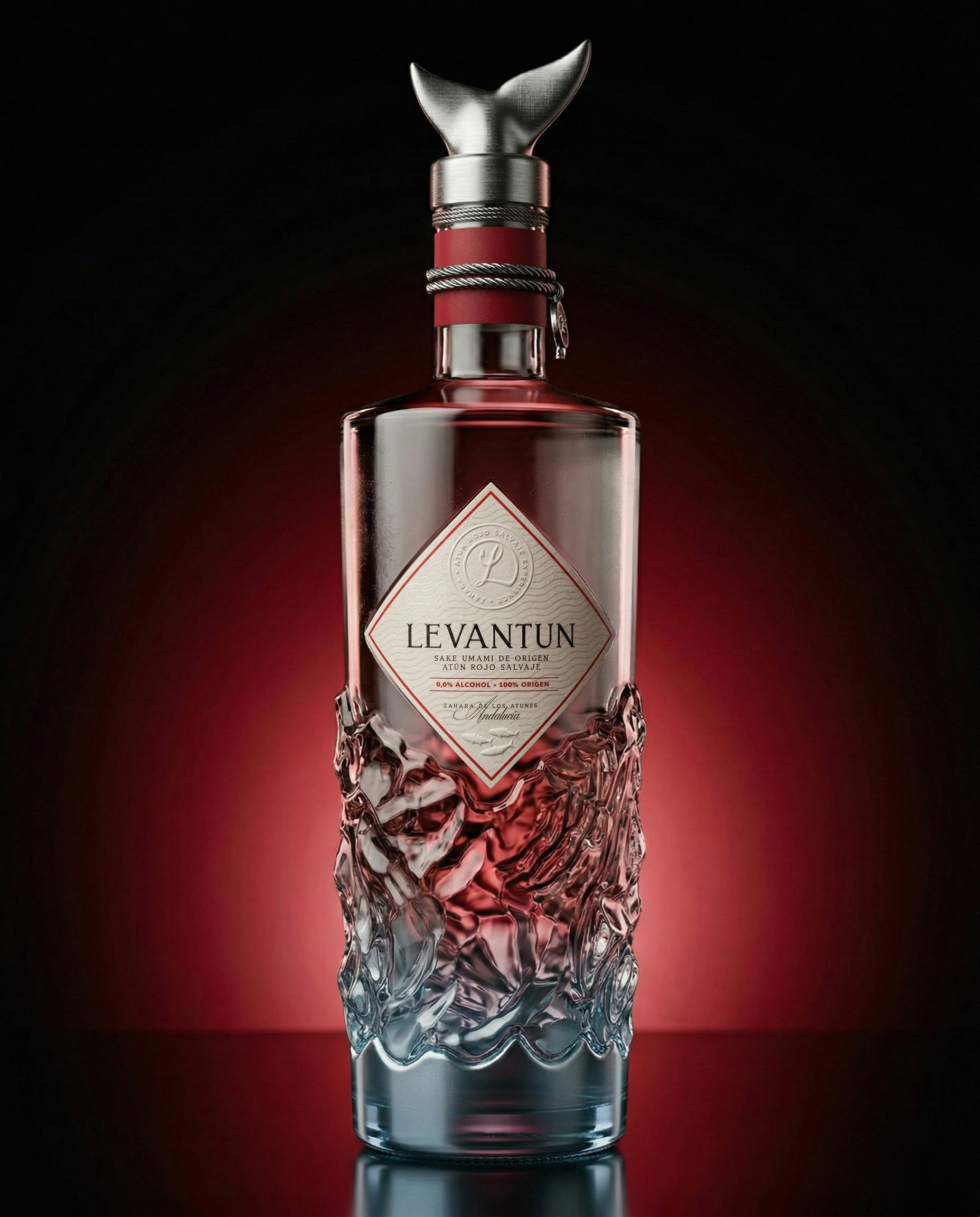
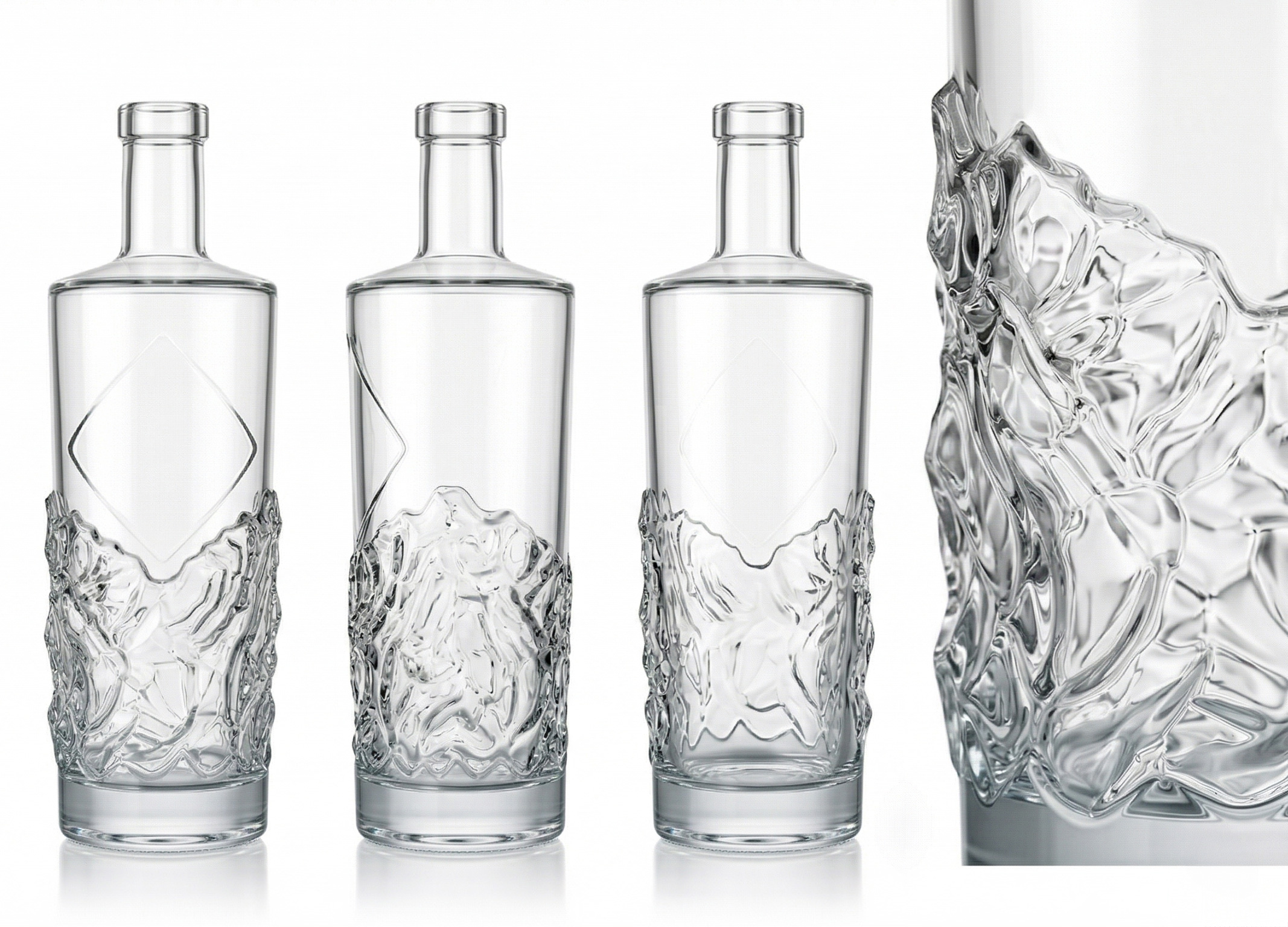
The bottle design, developed by Hugo Zapata, is an essential part of the concept and functions as a material interpretation of the lifting.
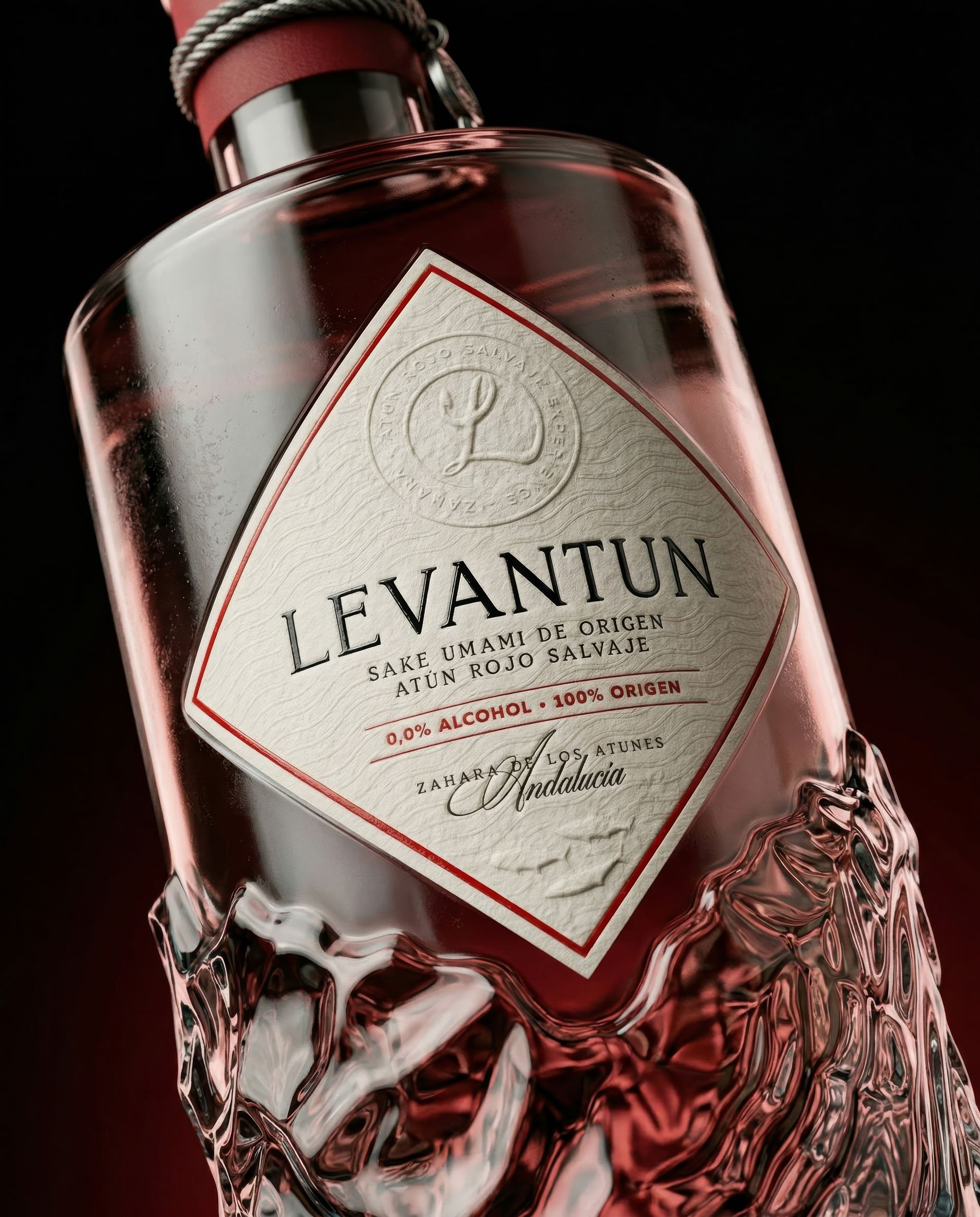
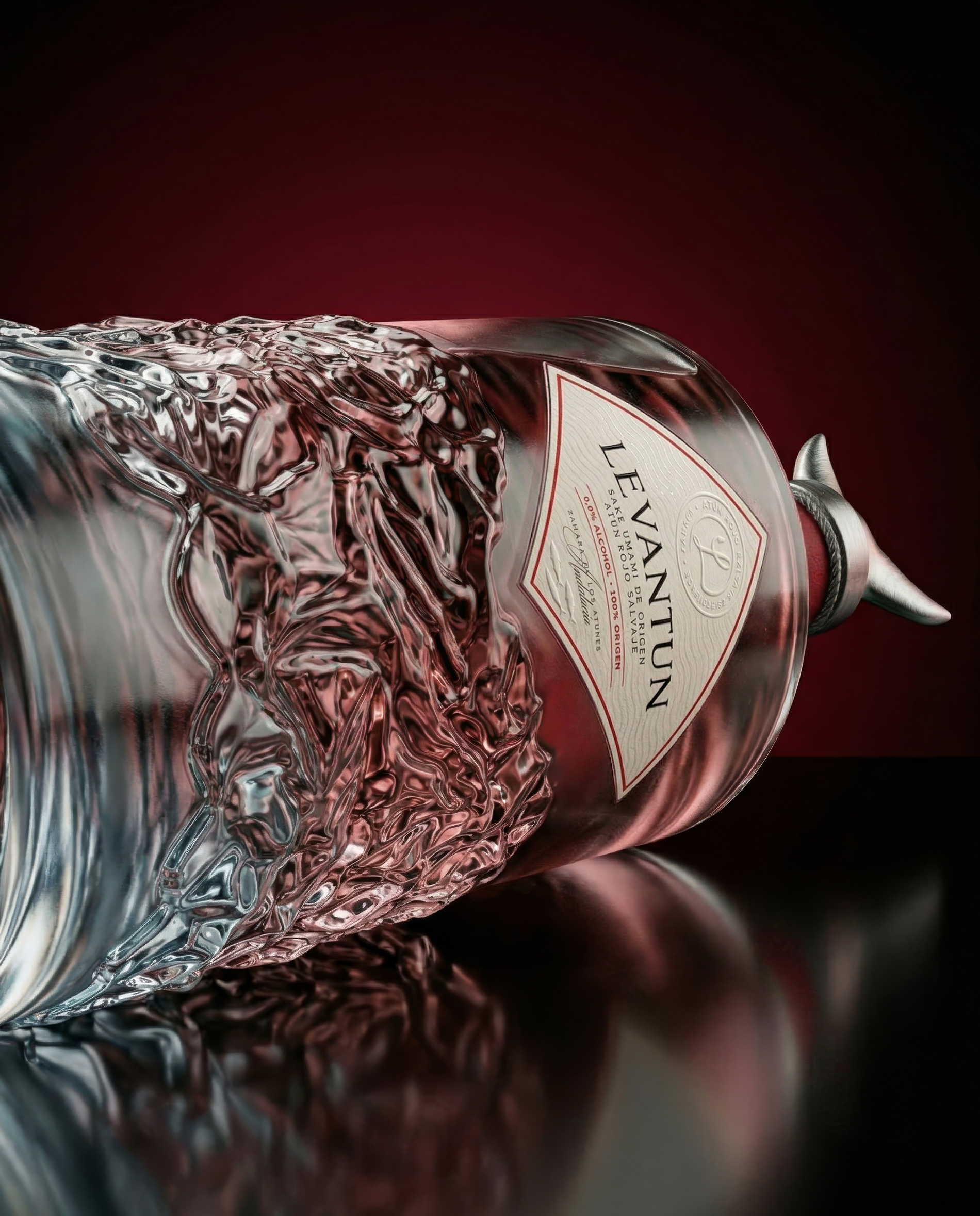
The fluid forms of the base evoke the movement of water under tension, that instant when the sea stirs as the captured wild tuna rise to the surface. The “waters” of the glass are not merely decorative: they represent a dynamic and organic moment where everything converges.
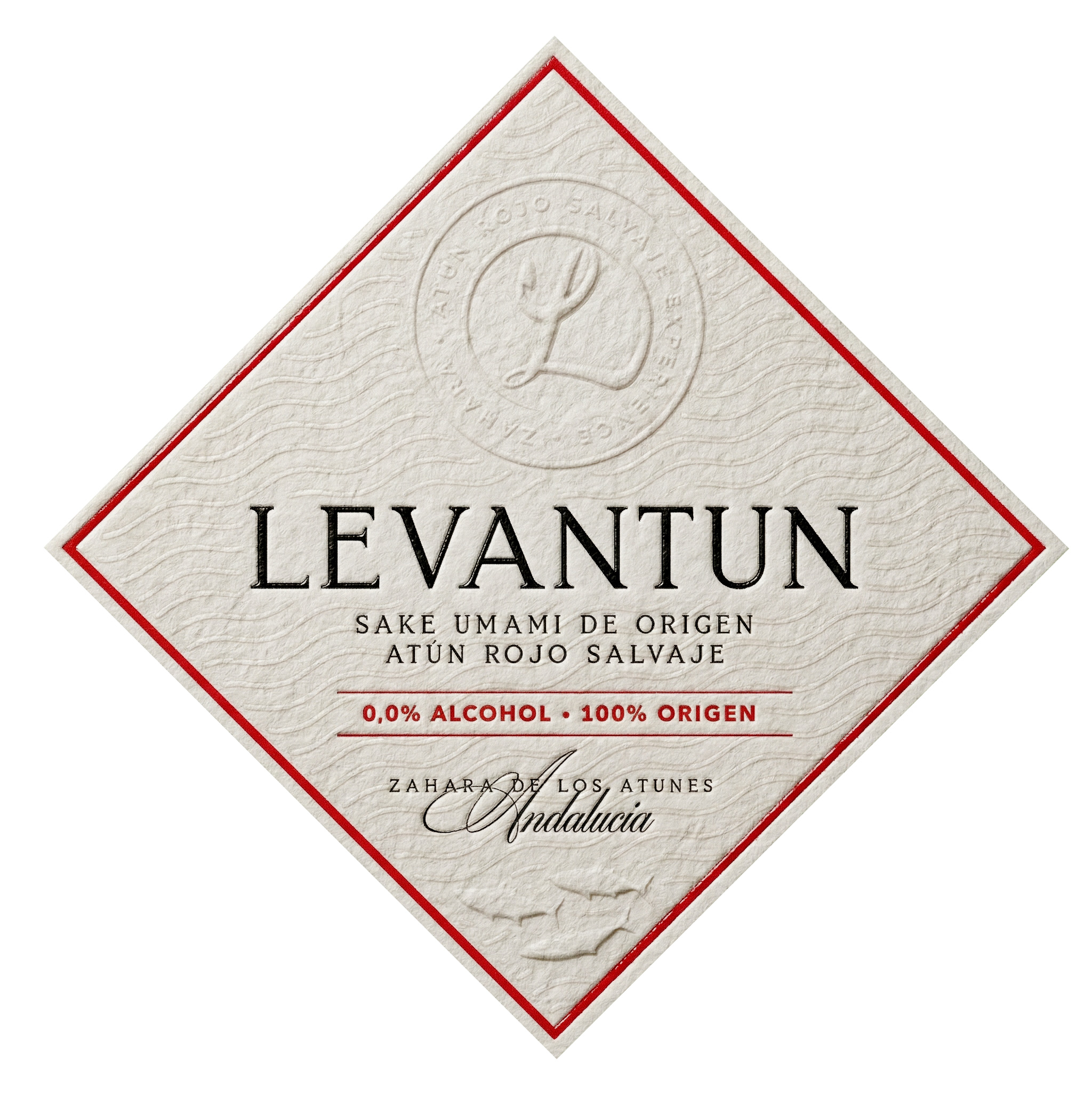
In contrast, the upper part—more contained and precise—acts as a plane of calm where the label is placed. This formal element functions as an almost surgical point of control against the energy of the base.
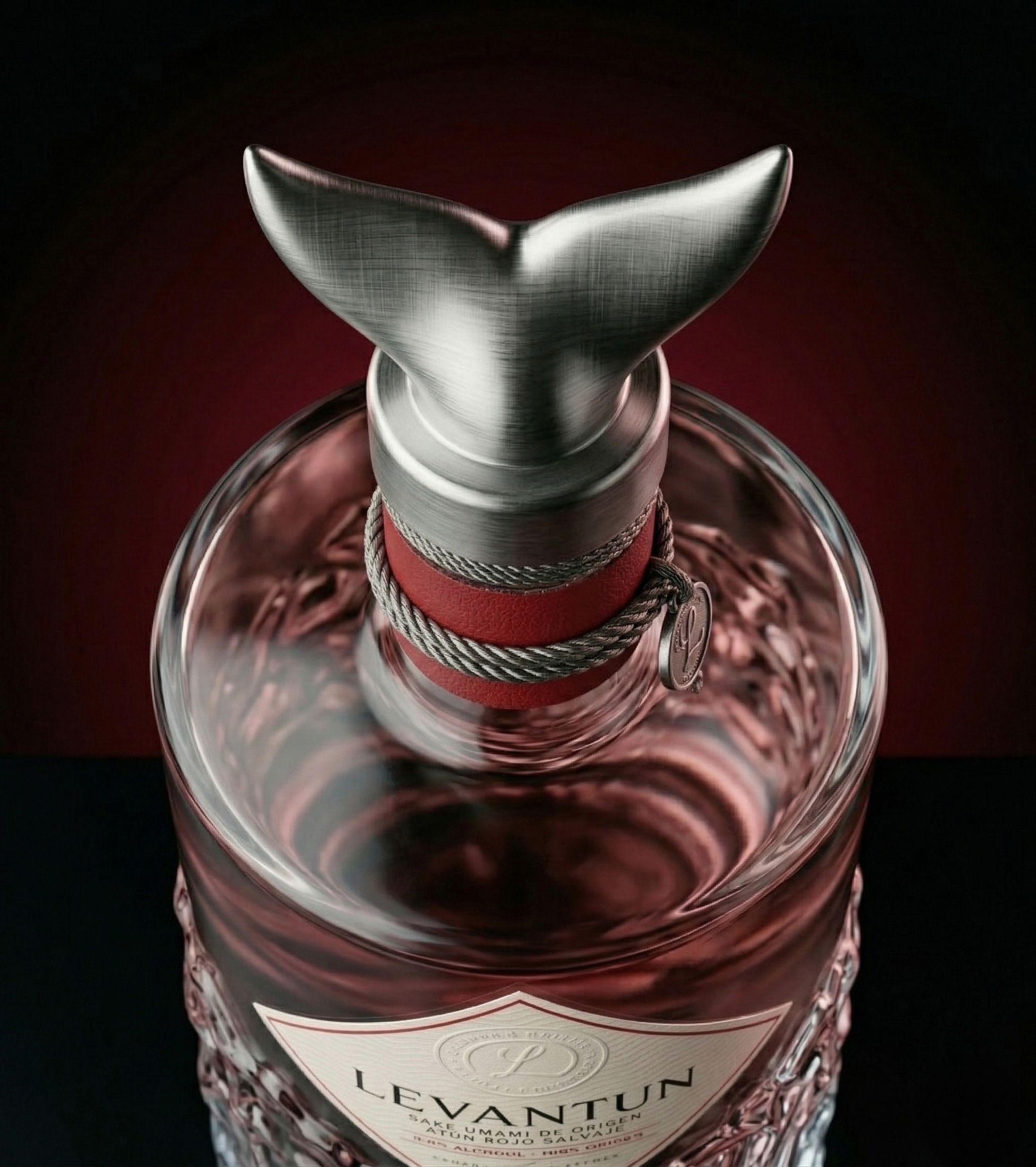
The closure incorporates a direct symbol of origin: a steel stopper in the shape of a tuna tail.
The set is completed with:
* high-density glass
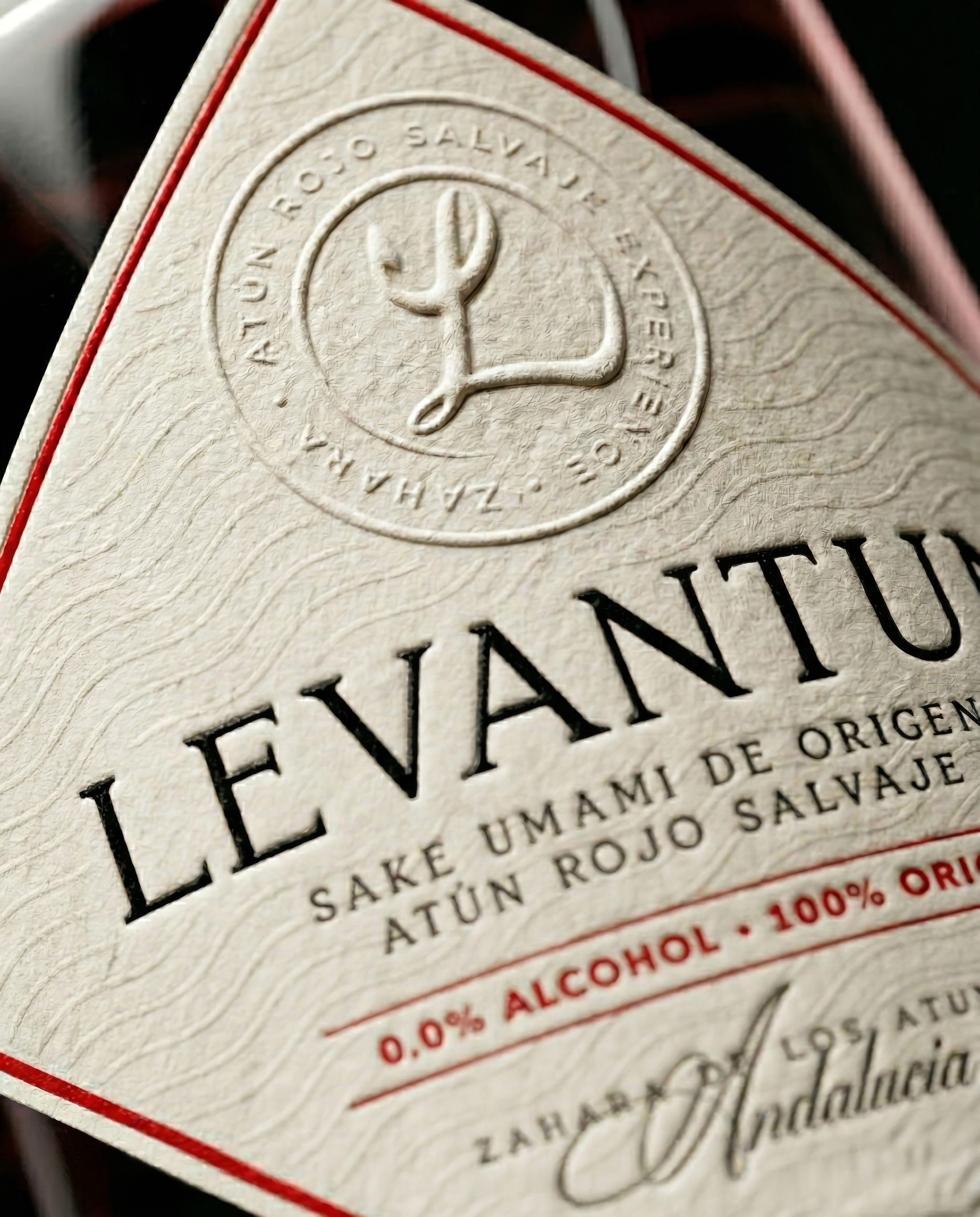
* label on Fasson® Lin Fiber FSC® paper with special finishes
* precise dispensing system
The result is an object that translates an age-old ritual into a contemporary form, situated between industrial design, functional art, and a collector’s item.
Cromotika: DNA as a signature of origin
One of the most innovative aspects of LEVANTUN is the integration of Cromotika, a system that allows for the incorporation of real DNA into the product design.
In this case:
* DNA is extracted from bluefin tuna
* it is translated into a generative visual pattern
* it is physically integrated into the label’s ink
Thus, the packaging becomes an active layer: a biological signature that directly connects the object to its origin.
Authorship and Positioning
LEVANTUN is presented as a work signed by Hugo Zapata, where the design does not act as a decorative element, but as a structural system.
The project is situated at the intersection of:
* haute cuisine
* designer fashion
* material innovation
And it defines its own category: a cereal-based 0.0 umami extract, structured with marine matter and certified by DNA.
Statement
“LEVANTUN takes the language of sake as its starting point, but transforms it into something else. It is an interpretation of the ‘levantá’ (the act of raising the fish) translated into the language of design and gastronomy.” — Hugo Zapata
CREDIT
- Agency/Creative: Hugo Zapata
- Article Title: Hugo Zapata Transforms Levantun Into a High Precision Culinary Experience Through Design
- Organisation/Entity: Agency
- Project Type: Packaging
- Project Status: Published
- Agency/Creative Country: Spain
- Agency/Creative City: sevilla
- Market Region: Europe, North America
- Project Deliverables: Design, Label Design, Packaging Design, Structural Design
- Format: Bottle
- Industry: Food/Beverage
- Keywords: levantun, design, LabelEngineering, packaging
-
Credits:
design and illustration: Hugo Zapata
3d and technology: cromotika









