




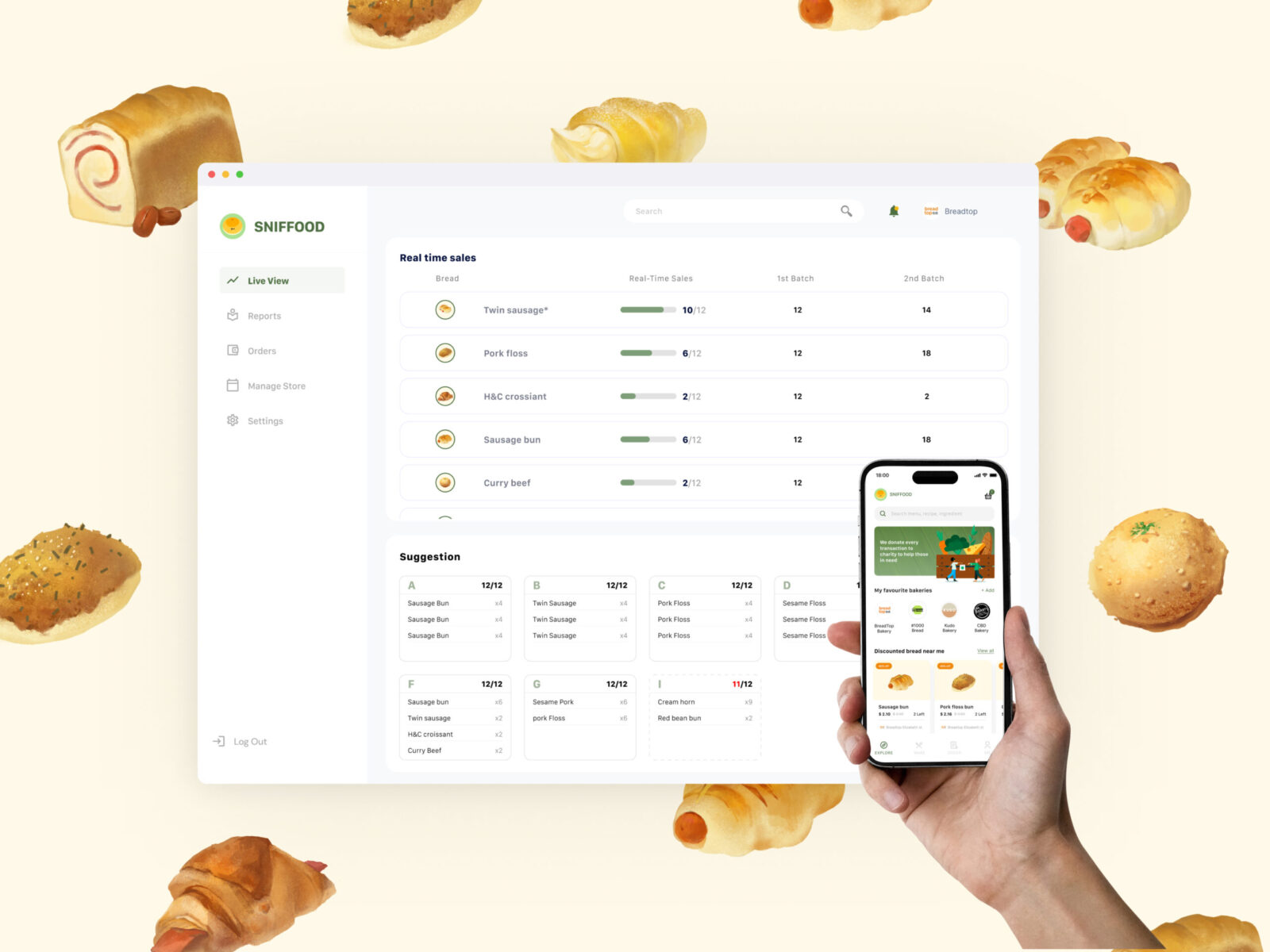
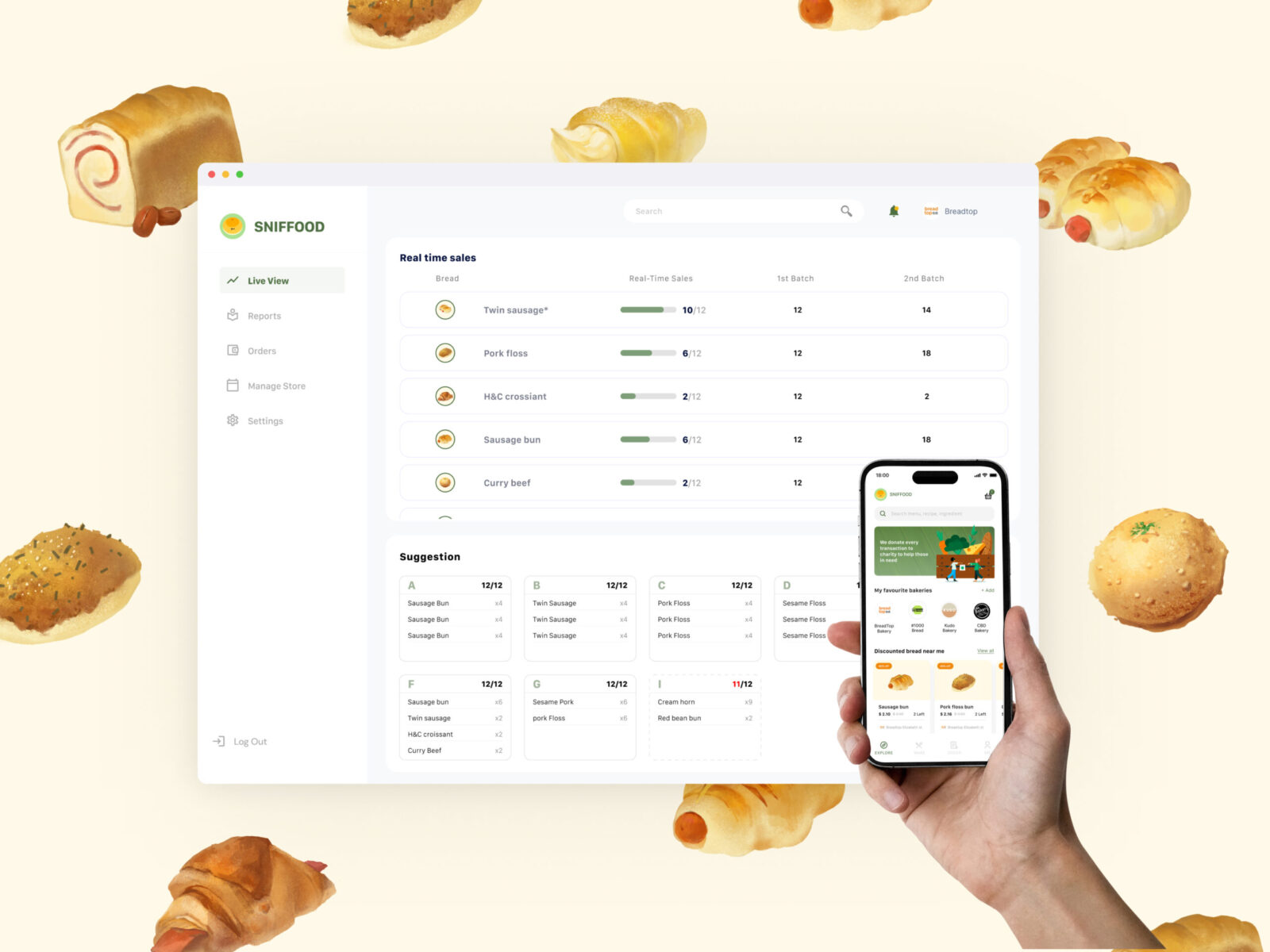
Shorts: Sniffood is a system-driven app and dashboard, which offers bakery merchants a POS data-based prediction tool, a redistribution-based consumer app, secure donation solution, designed to address surplus bread waste.
As a part-time bakery employee, I noticed that there is leftover bread every day at closing time. This leftover bread is fresh and still good to eat, but unfortunately, it ends up getting thrown into the trash. So this sparked the question for me. Why is there an oversupply of bread in Australian bakeries? More specifically, the problem was that the bakery struggles to produce appropriately, resulting in daily waste of surplus bread
Through competitor analysis, I identified two existing redistribution apps—Too Good To Go and Left Spring—and one prediction tool, Cybake. However, none of these solutions can both predict production needs and effectively manage surplus food.
After interview with domain expert, professor told me that analyze the presictive business model to determine production, and probably bread waste, which also depends on where bakerys are located, and are surplus breads tracked or just discarded at the end of the day, and local charites are eager to receive donations.
I also recruited participants in a Melbourne CBD bakery, including bakery owner and staff members with relevant work experience as well as customers, in order to capture insights from both perspectives. Through expert and stakeholder interviews, I mapped the bakery’s operations and identified improvement opportunities.
I found that for bakery owners, they want to increase sales, balance profit and waste, and minimize donation risks; for kitchen staff, they want to clear daily prduction plans, have real-time stock visibility, and avoid overproducing; for customers, they want a flexible purchase time, see availability of favorite bread, and save money.
So, how might we support the transition to zero waste for bakeries in Australia by using a predictiong production( Part of proceeds are donated to charity when customers buy surplus bread) and redistribution( Bakeries can optimize output by tracking and managing products) approach to reduce waste?
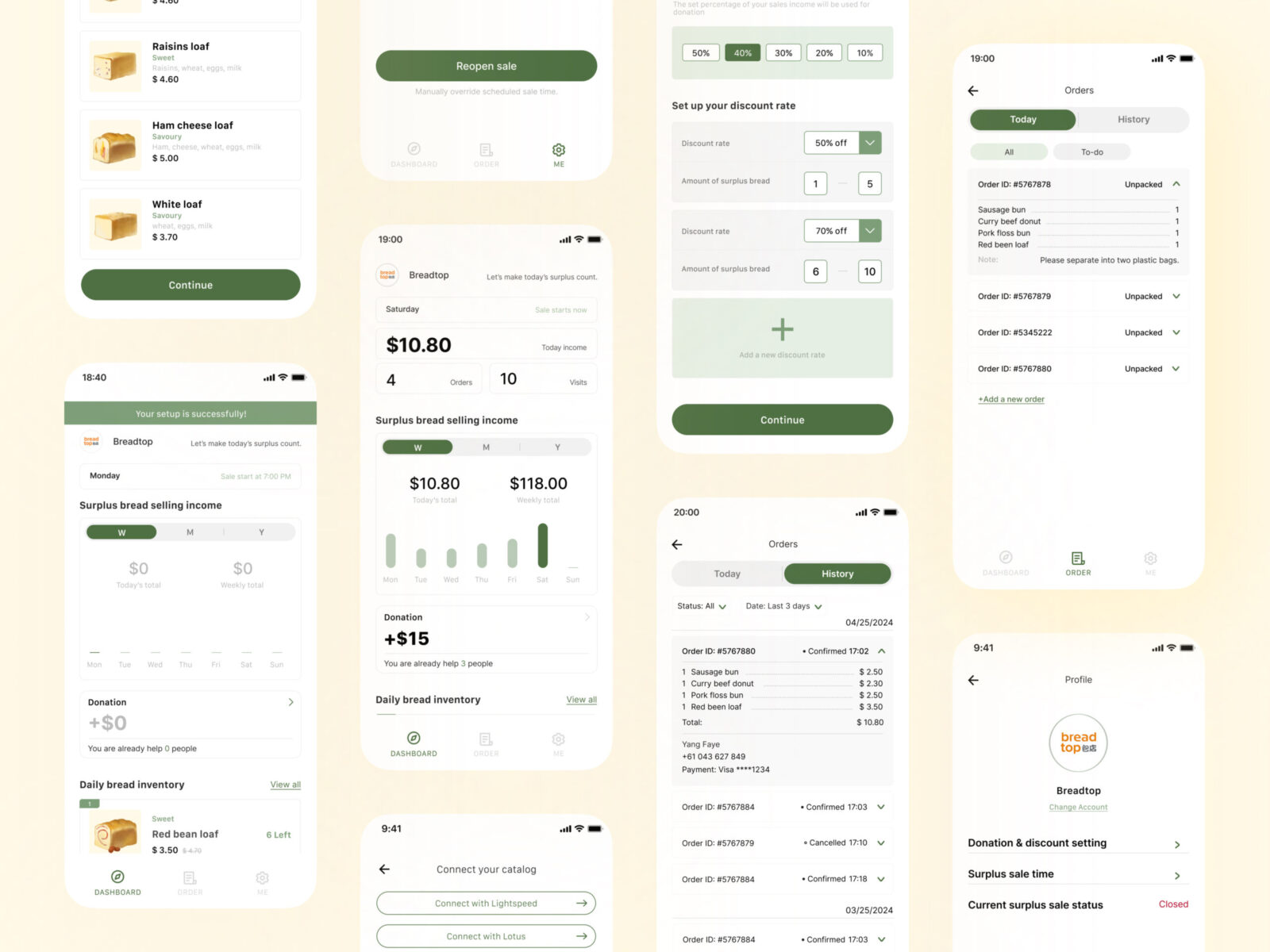
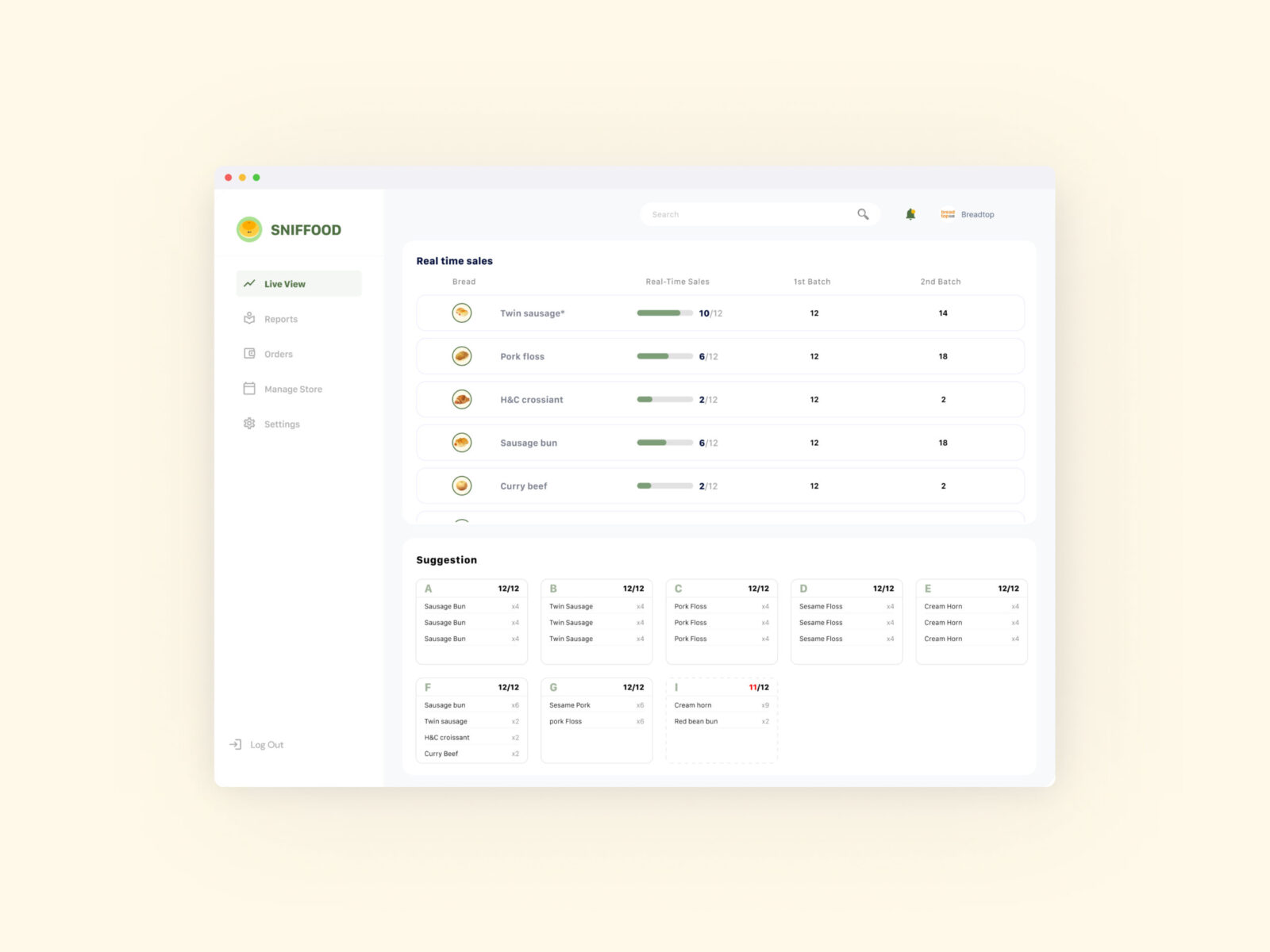
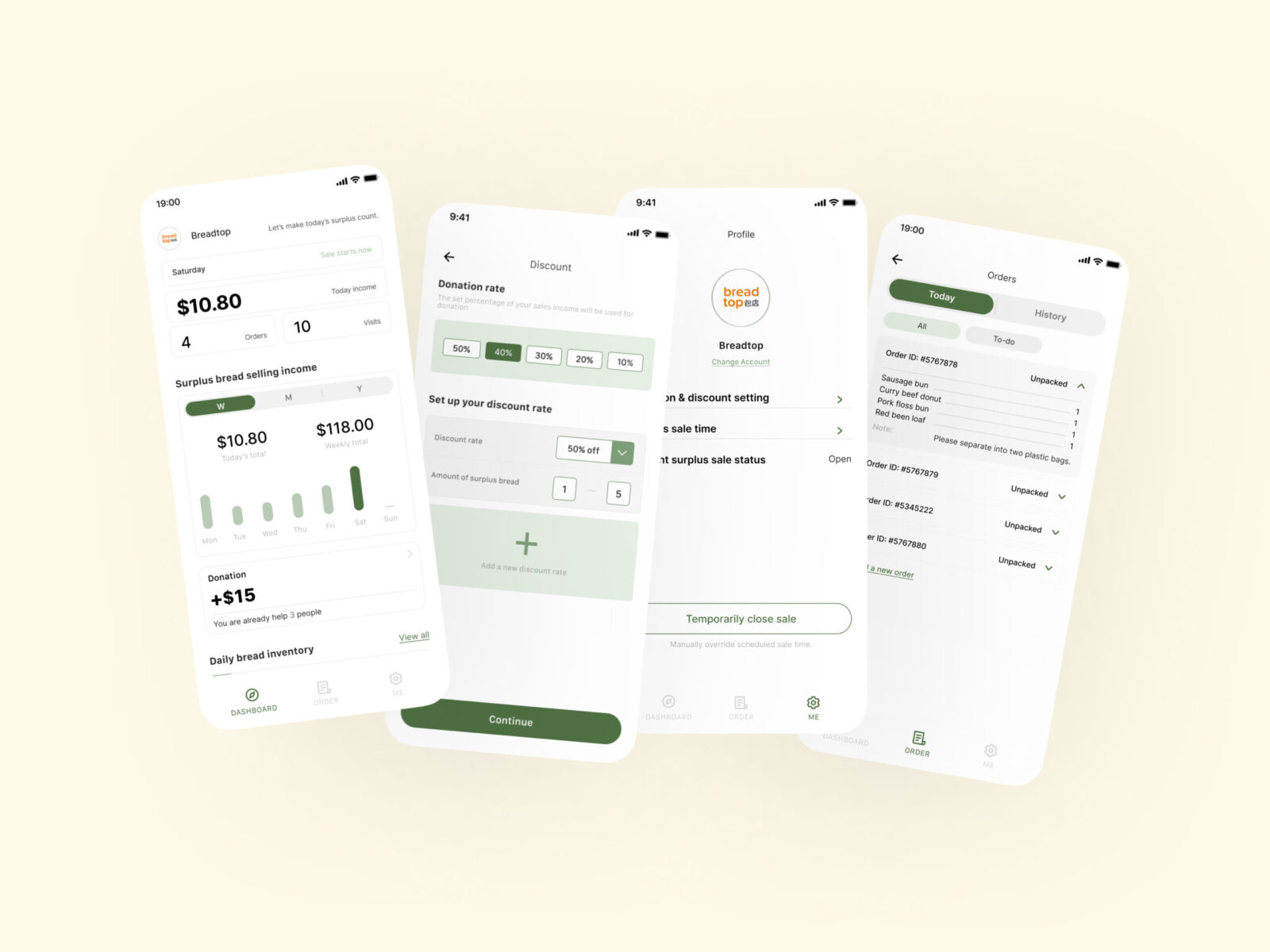
This project includes two portals: one for merchants, featuring an auto prediction tool, and one for customers, app connects with live inventory.
Auto prediction tool, bakery owners can optimize their production with the auto prediction tool, which forecasts the required quantity for each batch and supports smart tray consolidation. By integrating with their POS system, it automates accounting and sales tracking, helping reduce waste and improve efficiency.
App connects with live inventory, customers benefit from the app by purchasing surplus bread at discounted prices, ensuring transparency in availability and reducing waste while enjoying fresh bread at a lower cost. Additionally, a portion of the income from the surplus sales is automatically donated to local charities, supporting the community.
CREDIT
- Agency/Creative: Lu Yang
- Article Title: Student Lu Yang Introduces Sniffood as a Data-Driven System to Reduce Bakery Bread Waste
- Organisation/Entity: Student
- Project Status: Non Published
- Agency/Creative Country: Australia
- Agency/Creative City: Melbourne
- Project Deliverables: App Design, Interaction Design, User Experience, User Interaction, Web Design
- Industry: Food/Beverage
- Keywords: WBDS Student Design Awards 2025/26 , System-driven, Prediction, Redistribution, Surplus bread waste, Bakery owners, Customers
-
Credits:
UX Research & UI designer: Lu Yang









