



Iron rusts with disuse. Water, unstirred, turns foul. Flame, unbridled, burns to ash.
A language that stops growing and developing, ultimately decays.
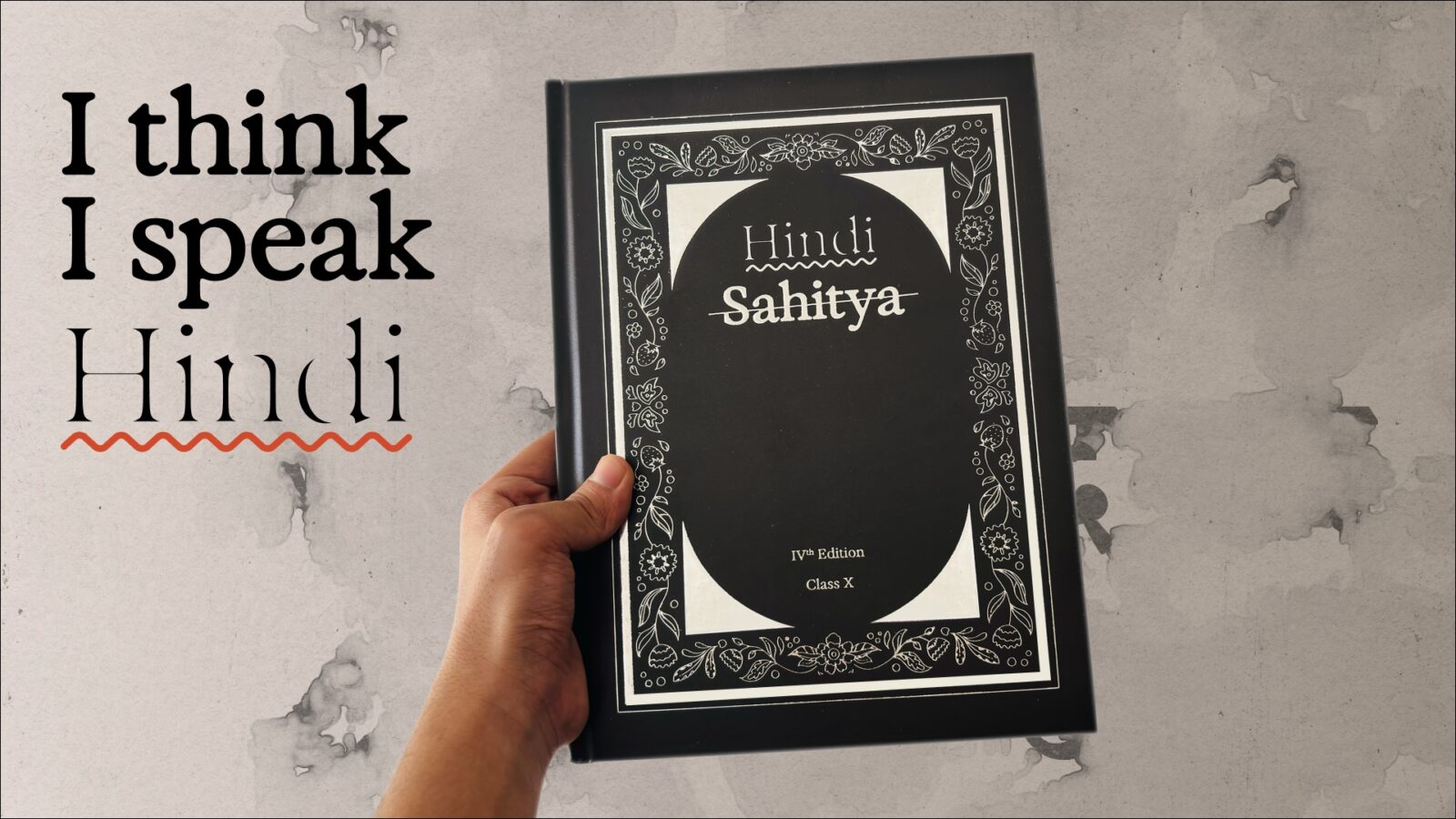
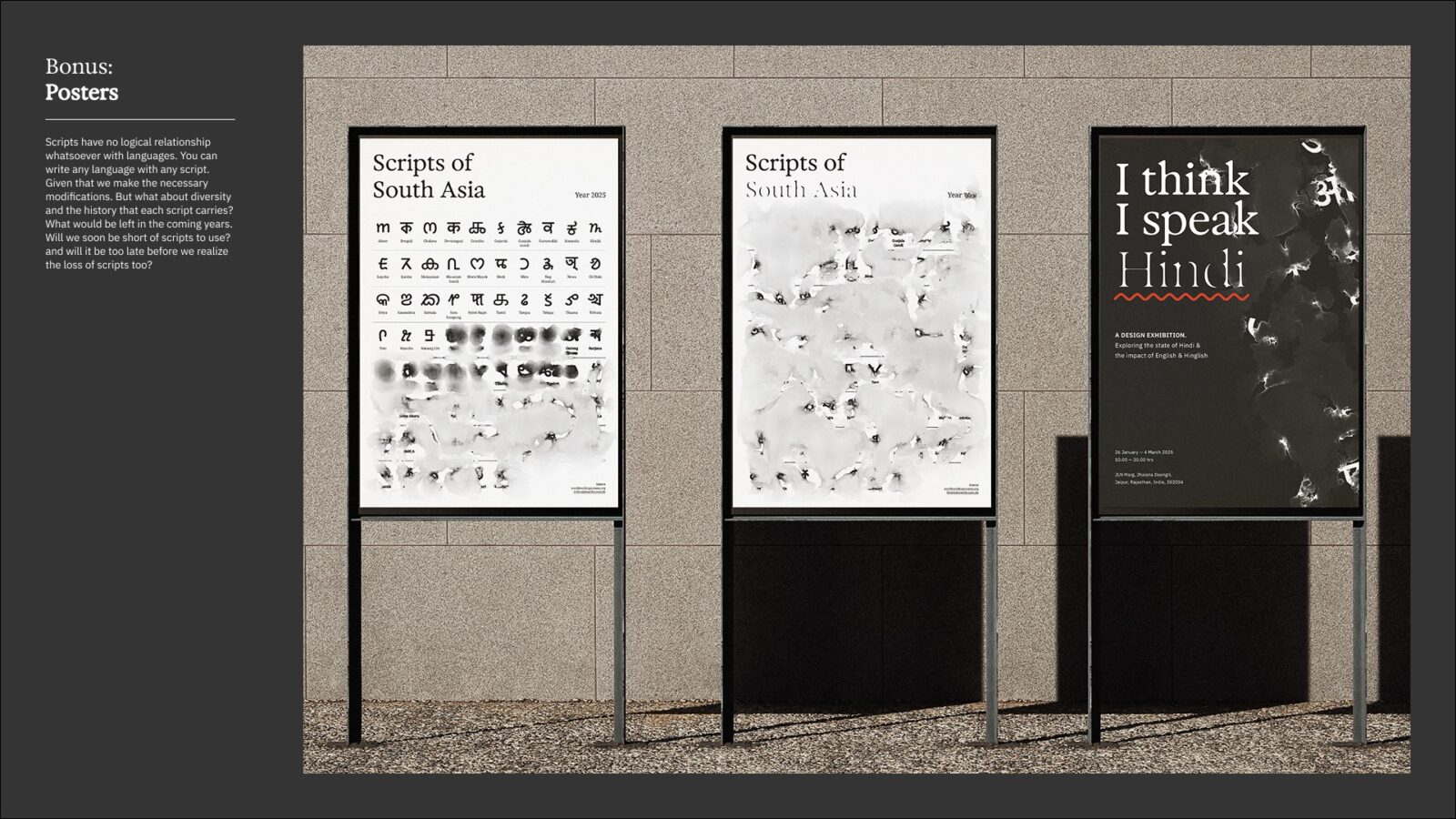
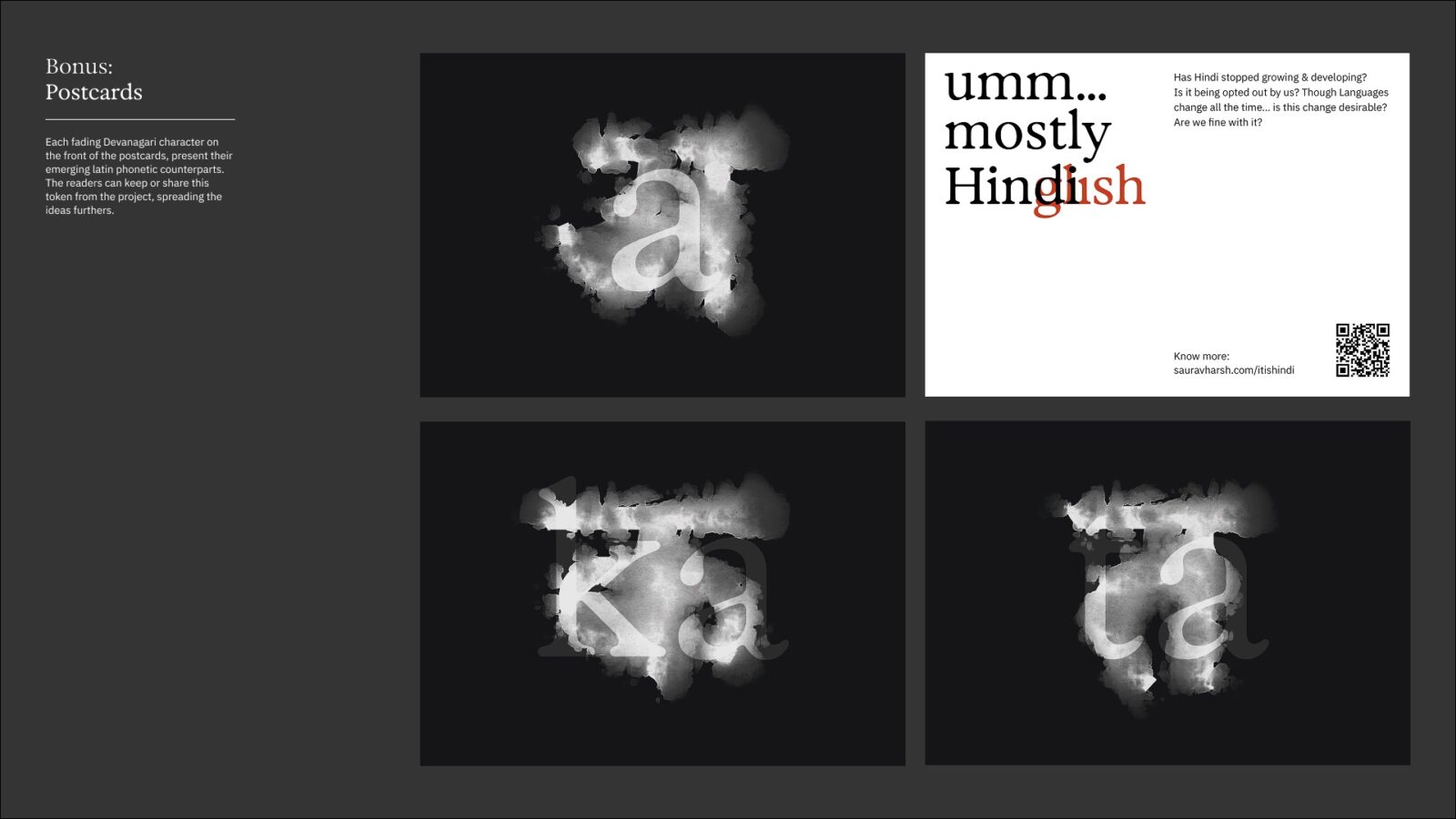
“I think I speak Hindi” talks about the emerging language shift and decay, created by the steady increase and influence of Anglicised Indian languages, where even Major Languages in India are suffering loss. While it focuses majorly on Hindi, the general findings and insights—to a certain extent—remain true for many other Indian languages as well.
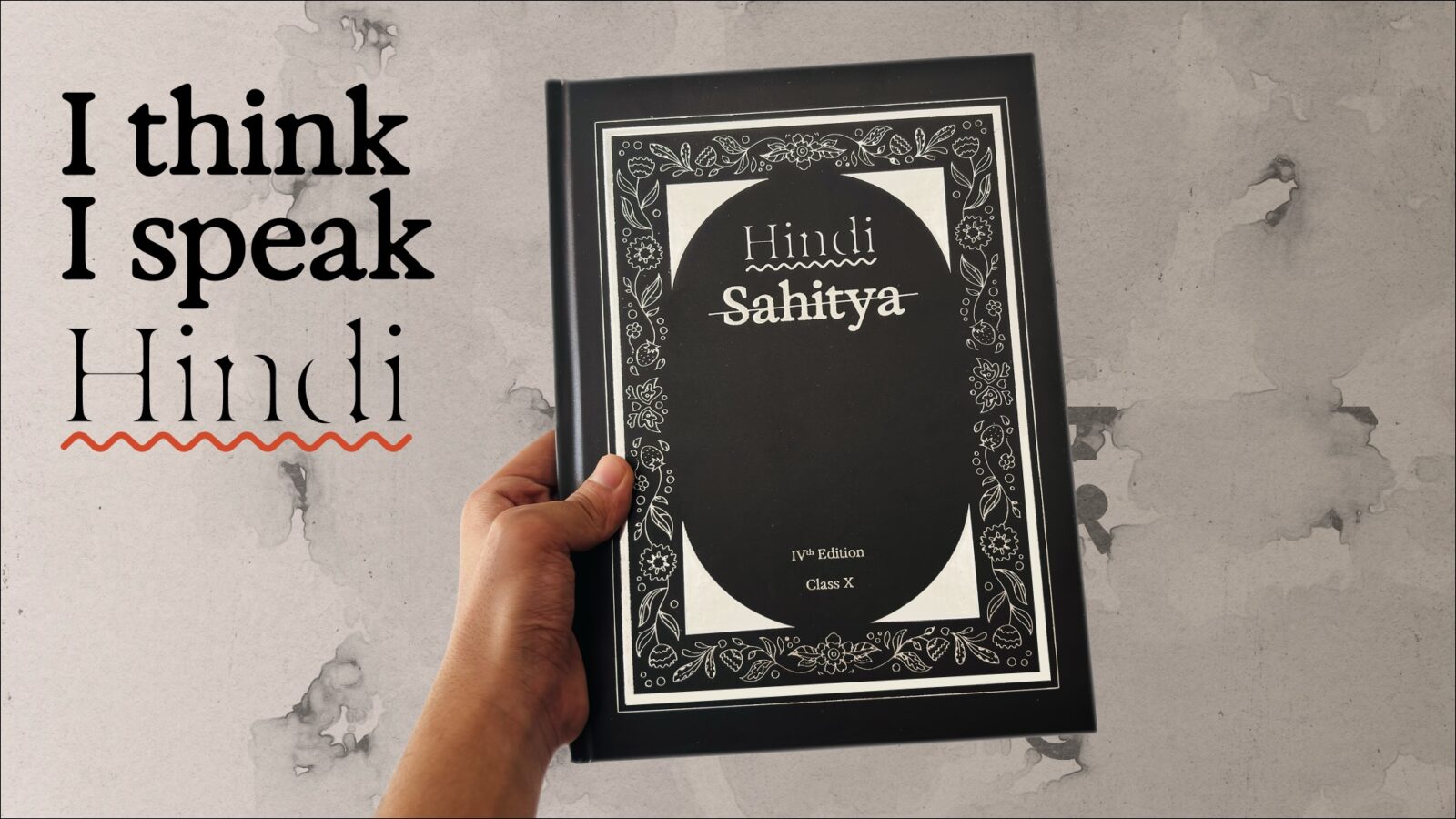
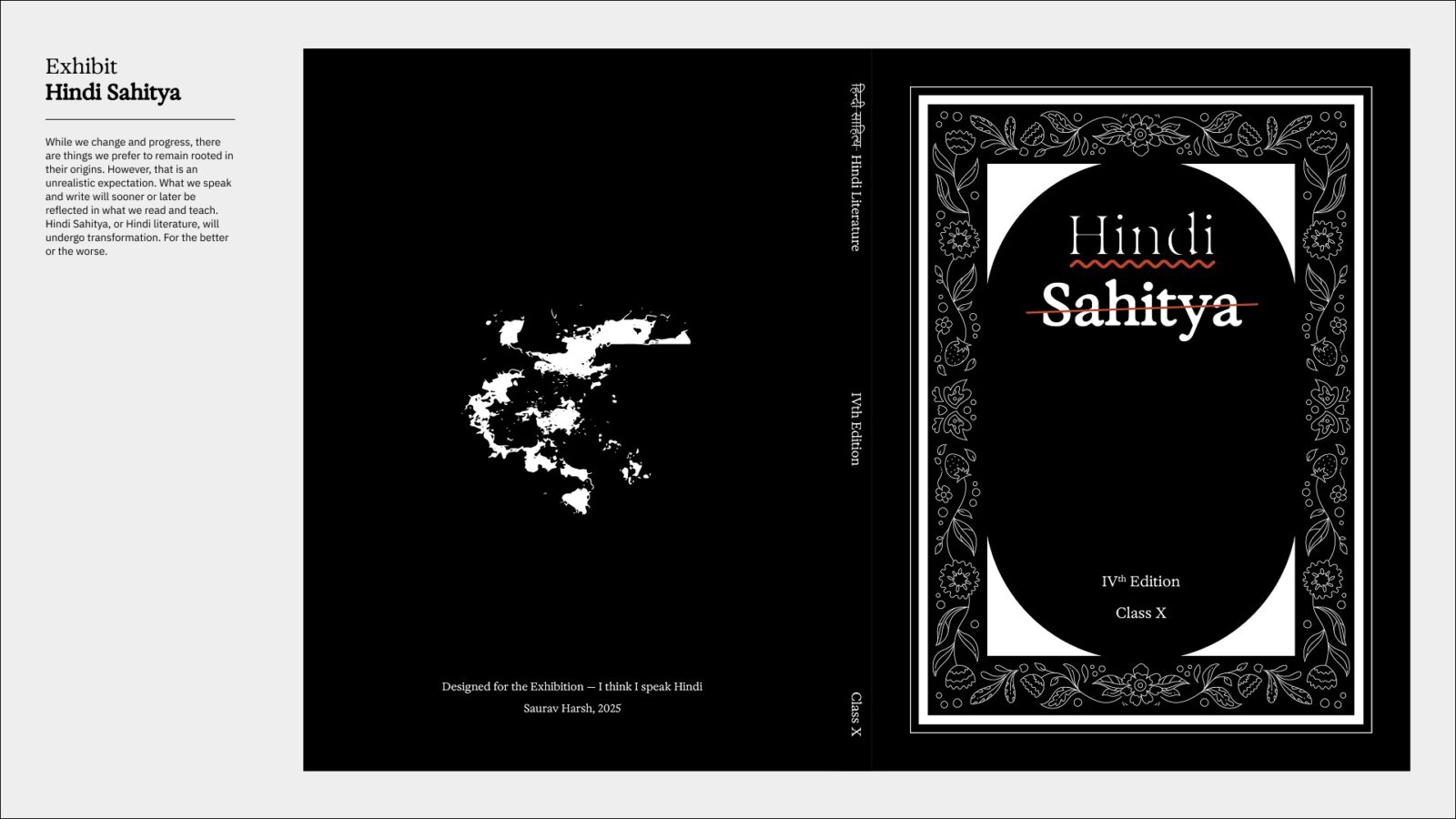
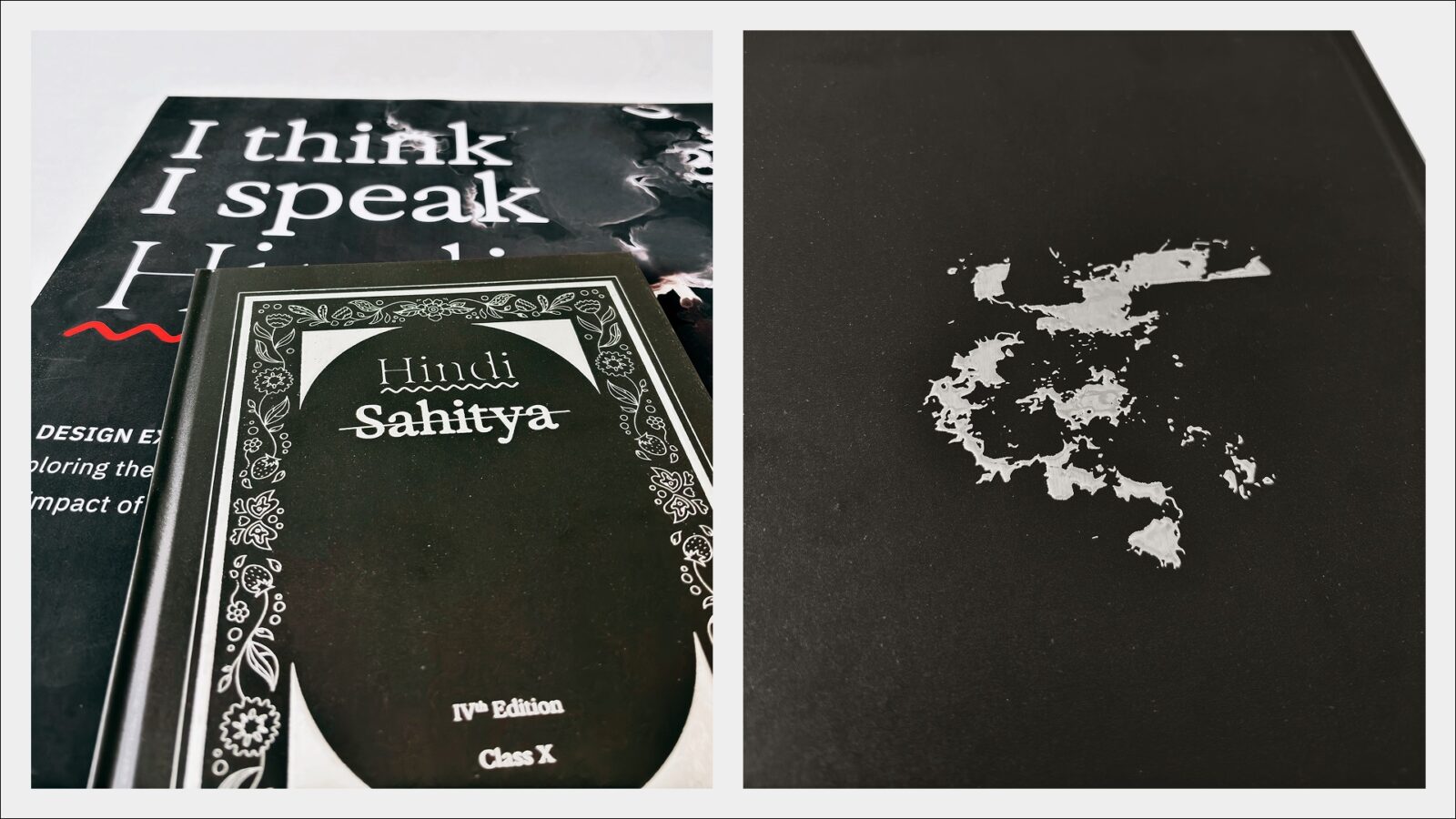
The project caters to issues related to language development primarily, but also tries to question cultural and social identities. It is made up of several artefacts that come together as an exhibition, with major focus on the book “Hindi Sahitya (Literature)”
MAIN EXHIBIT: PUBLICATION
“Hindi Sahitya” is a play on school books, that experiments and uses elements of controlled chaos to raise questions on the theme of the project more critically. To move from a state of indifference to conscious steps towards respecting and developing mother tongues
Being a part of the social demographic that is heavily impacted by this shift, I aim to influence others to think more critically about the usage of their mother tongues. It tackles this through Visual Communication, that attempts to give the concern an image and identity to hold on, and to make it more evident and visible.
Participation-ism (Manzini, 2016), is a limitation that the society induces upon designers experts, restricting them to express themselves. The project outcomes break away from that. And in order to support the critical design approach, ideologies of Post Optimal and Para Functional design (Malpass, 2017) are leveraged. Along with a speculation of a near future of Hindi and Devanagari that is not necessarily possible but pretty believable. The project should ideally act as a cautionary tale for everyone.
Theme
To attempt to push the audience to notice the existence of Hinglish—as ‘A Bestiary of the Anthroprocene’ (Roszkowska, 2021) does for artifical fabrications—around us and the impact it has started to have on Hindi.
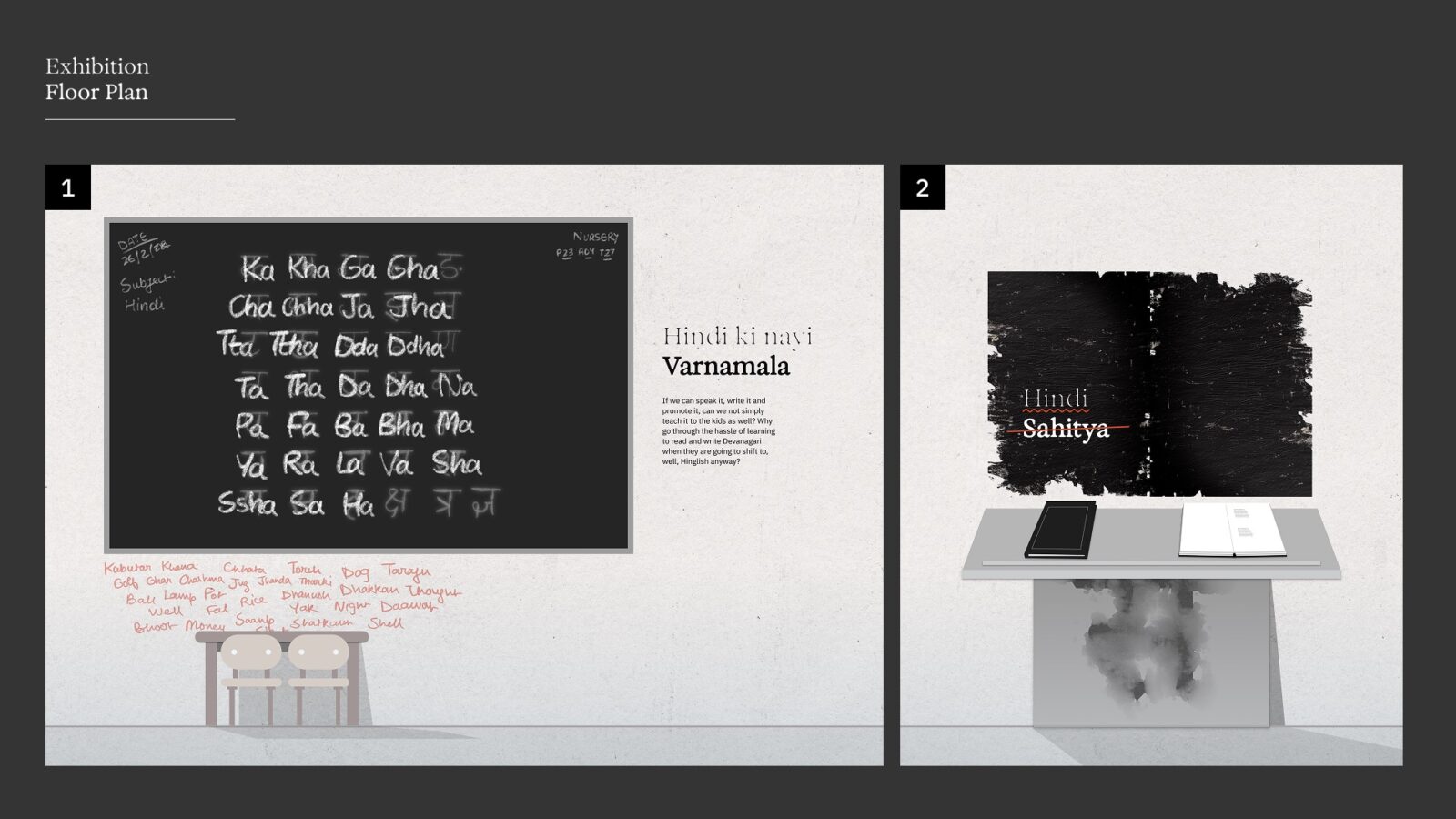
Exhibition Plan
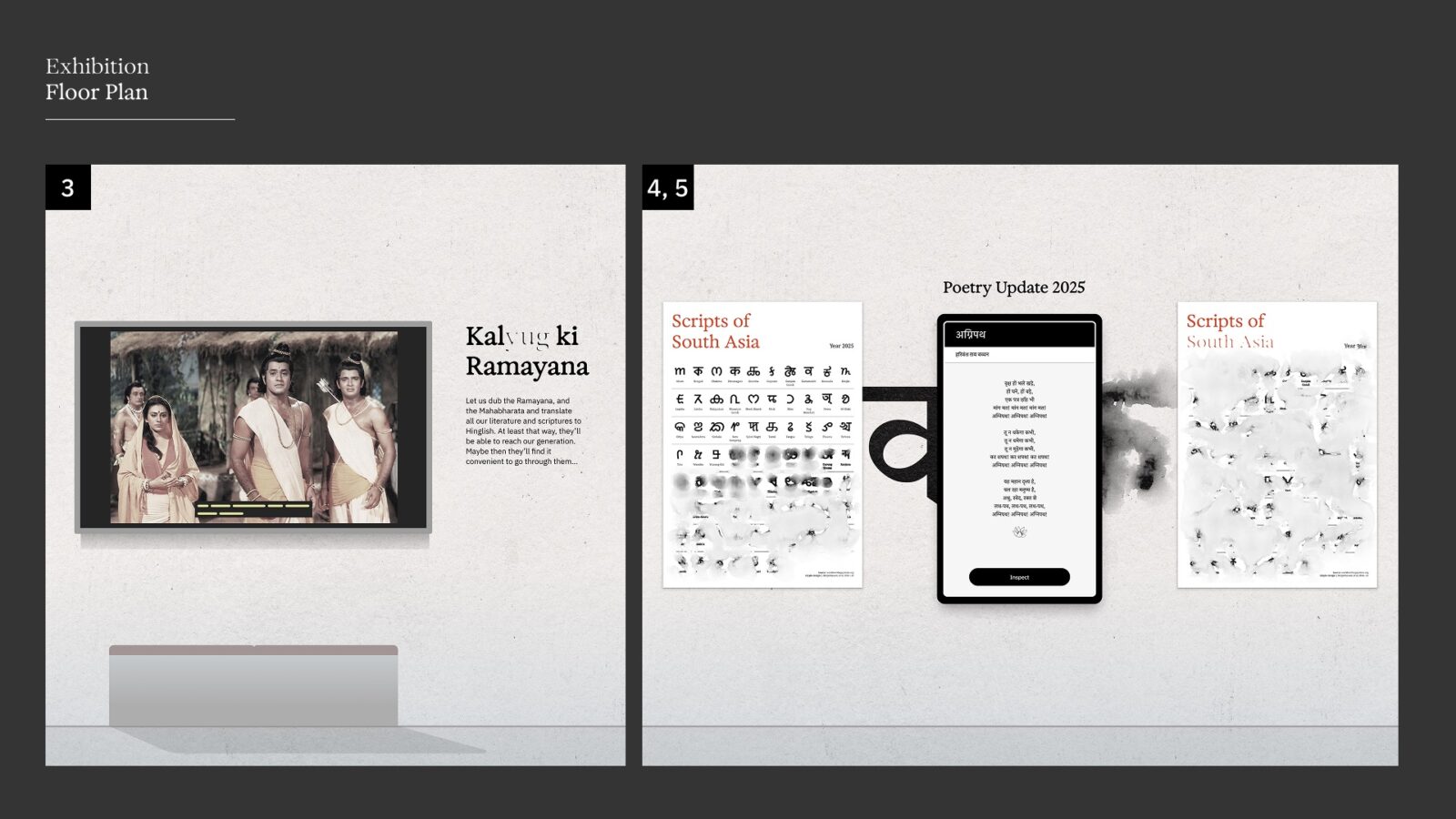
An exhibition with different crafted and documented artefacts. The user journey of the exhibition would start from an introduction, following artefacts that at first resemble real objects but as the viewer goes through them, they reveal more. The flow and order of the exhibits are in relation to the percieved increase in the complexity of their language.
Naming
I think I speak Hindi was chosen for its ability talk from a personal place which the audience could relate to. The fact that it is written in English gives irony to the statement. People could easily replace Hindi with their own language and it will still make sense. It provides instant context and idea on the theme of the exhibition
Context
The content of project builds upon existing literary and academic pieces (credited throughout) and structures them in a way that it becomes easy for the audience to consume them. All other content was written based off of the learnings from the project, with a ‘contemplative’ tone of voice and sometimes sarcastic.
Language of Project
Similar to the name, the rest of the content of the project mostly uses English & Hinglish. This carries on the irony of the name and it also relevant because that is what the target audience finds more attractive and convenient to engage with.


CREDIT
- Agency/Creative: Saurav Harsh
- Article Title: Saurav Harsh Student Concept for “I think I Speak Hindi”
- Organisation/Entity: Student
- Project Status: Non Published
- Agency/Creative Country: United Kingdom
- Agency/Creative City: London
- Project Deliverables: Art, Art Direction, Design, Editorial Design, Exhibition Design, Poster Design, Typography
- Industry: Non-Profit
- Keywords: WBDS Student Design Awards 2025/26 Critical & Speculative Design, Communication Design, Exhibition Design, Experimental Design









